Coach New York: From a Manhattan Workshop in 1941 to the Tabby
The story of Coach New York, from six leather-workers in a Manhattan loft to a global brand. Glovetanned leather, Bonnie Cashin's turnlock, the hangtag, the Signature C, Tapestry, the Tabby, and what it all means when you buy a Coach bag today.
In this article (27)
- Coach at a glance
- 1941: six craftspeople in a loft
- Bonnie Cashin: the designer who changed the handbag
- 1972: "It's not a Coach bag without the Coach tag"
- Coach's house codes, decoded
- Growth: Madison Avenue, Sara Lee and the 1980s
- Reed Krakoff and the Signature C
- Coach and the outlet business
- Stuart Vevers and the return to the archive
- 2019: the Tabby
- Campaigns and faces
- The New York family
- From Coach to Tapestry
- Sustainability: (Re)Loved and Coachtopia
- Vintage Coach: why older bags are collected
- Coach's leathers through the decades
- Coach today: "expressive luxury"
- Coach's iconic bags, in order
- What Coach does well, and where it has been criticised
- Why Coach suits life in Pakistan
- What Coach's history means for the bag you buy
- Reading a Coach bag like a historian
- Is Coach a luxury brand?
- How to tell a genuine Coach bag
- Coach at ULVARE
- Frequently asked questions
- Sources
Most people who buy a Coach bag know the name, the C and perhaps the Tabby. Far fewer know the story behind them: a story that starts with six craftspeople in a Manhattan loft during the Second World War, passes through a baseball glove, a designer who rethought what a handbag could be, a horse and carriage, a slogan about a leather tag and a monogram that defined the 2000s, and arrives at today's Coach, which describes itself as a house of "expressive luxury" and is winning over a new generation.
This is that story. We'll follow Coach from 1941 to today, explain where its signature details came from, and show what that history means for the bag you're choosing now, because so much of what makes a Coach bag a Coach bag was decided decades ago.
Coach at a glance
| Year | What happened |
|---|---|
| 1941 | Coach begins as a family-run workshop on 34th Street, Manhattan, with six leather-workers making wallets and billfolds |
| 1946 | Lillian Cahn joins the business; by 1950 Miles Cahn is running it |
| 1950s | Inspired by baseball gloves, Miles Cahn develops the soft, supple leather that becomes glovetanned leather; Coach moves into handbags |
| 1961 | The Cahns complete a leveraged buyout of the company and hire designer Bonnie Cashin |
| 1962 to 1974 | Cashin leads Coach's design, adding side pockets, coin purses, colour and the turnlock |
| 1972 | The Coach hangtag debuts as a badge of authenticity |
| 1979 | Lew Frankfort joins; Coach's sales are about US$6 million |
| 1981 | Coach opens its first directly operated store, on Madison Avenue |
| 1985 | The Cahns sell Coach to Sara Lee Corporation for a reported US$30 million |
| 1996 to 1997 | Frankfort becomes chairman and chief executive; Reed Krakoff joins as designer |
| 2000 | The company is renamed Coach, Inc. and goes public in October |
| 2013 | Stuart Vevers becomes Coach's creative director; Coach's sales reach about US$5 billion |
| 2015 | Coach acquires shoemaker Stuart Weitzman |
| 2016 | Coach turns 75 and opens a flagship on Fifth Avenue |
| 2017 | Coach acquires Kate Spade; the parent company is renamed Tapestry, Inc. |
| 2019 | The Tabby launches in Coach's Fall 2019 collection |
| 2021 | The Pillow Tabby arrives; Coach launches its (Re)Loved programme |
| 2023 | Coach introduces Coachtopia, a circular sub-brand |
| 2024 | Tapestry's planned acquisition of Capri Holdings is blocked and abandoned |
| 2025 | Tapestry completes the sale of Stuart Weitzman to Caleres, to focus on Coach and Kate Spade |
| 2025 to 2026 | Coach drives Tapestry's growth, led by the Tabby, the New York family and younger customers |
1941: six craftspeople in a loft
Coach was founded in 1941 as a small, family-run workshop in a loft on 34th Street in Manhattan. Six leather-workers made a small range of handcrafted leather goods, mainly wallets and billfolds, sold wholesale. It was a modest business in a city full of leather workshops, and nothing about it suggested a future global brand.
What set it apart was attention to the material. Miles Cahn, who joined the business and was running it by 1950, noticed something about baseball gloves: with wear, their leather became softer and more supple, not weaker. He set out to recreate that effect deliberately, developing a process that made leather stronger, softer and more flexible, and that let it absorb colour deeply. The result became Coach's glovetanned leather, still one of the brand's signatures more than seventy years later.
Lillian Cahn, who had joined the business in 1946, saw the next opportunity: women's handbags. Coach's sturdy cowhide bags were an immediate hit. In 1961 the Cahns completed a leveraged buyout of the company, and Coach as we know it began.
Why glovetanned leather still matters
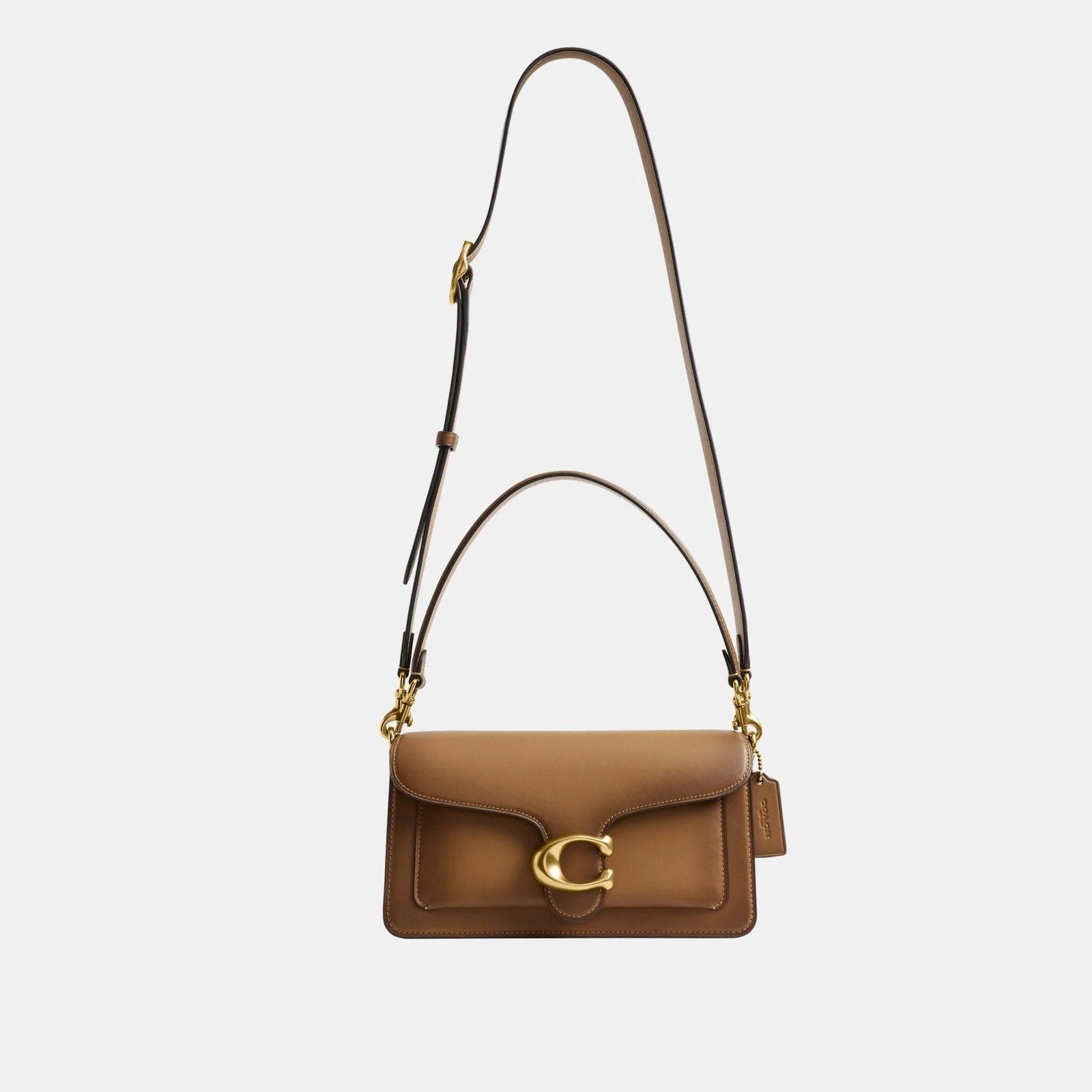
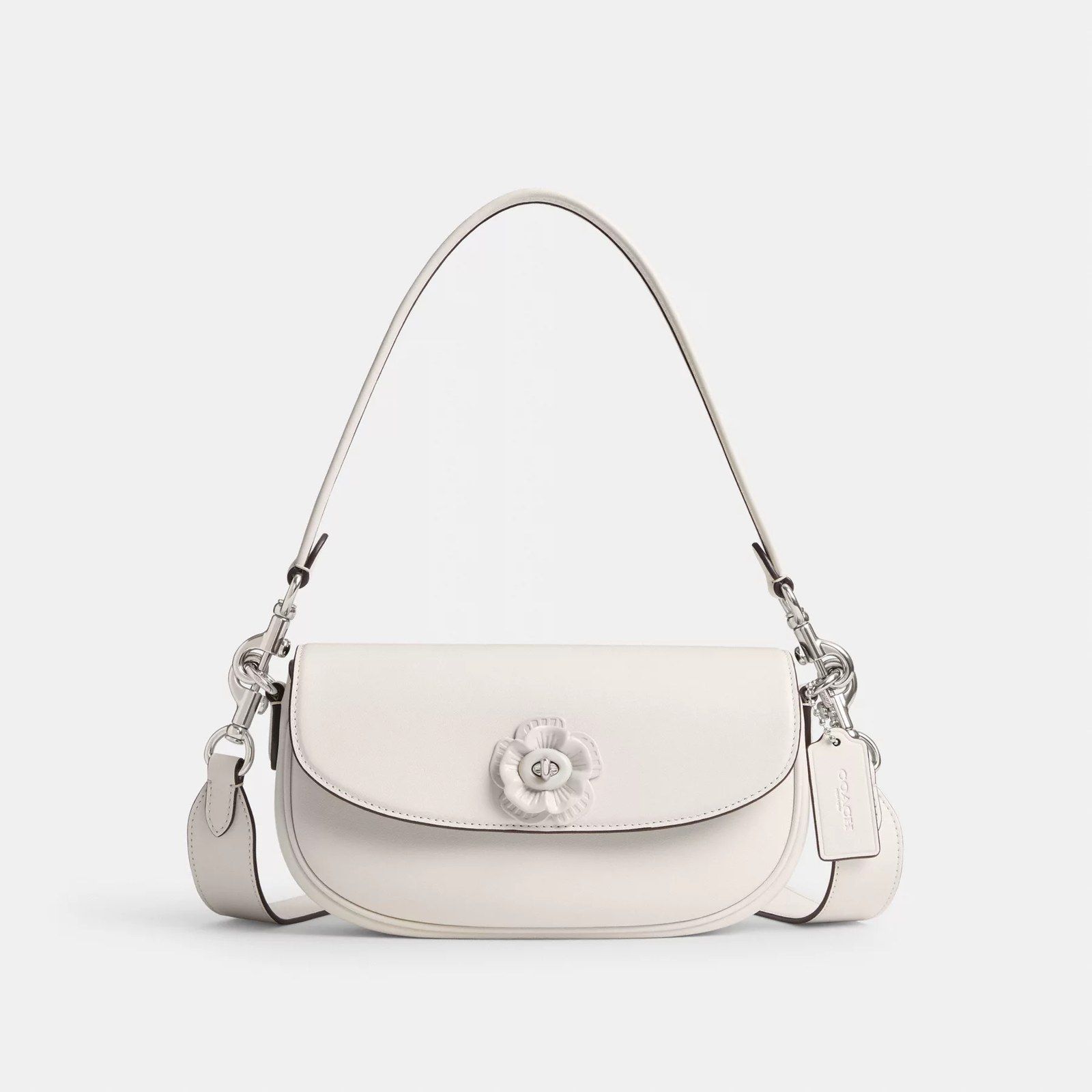
When you buy a Coach bag in glovetanned leather today, you're buying the material the company was built on. Glovetanned leather is full-grain leather finished to feel soft and supple, and it ages beautifully: it softens with handling, darkens slightly and develops a gentle glow, the patina that leather lovers prize. In our shop, the Tabby 20 and Tabby 26 in Honey Brown, the Empire Carryall 28 and the Emmy Saddle Bag are all glovetanned.
Bonnie Cashin: the designer who changed the handbag
In 1961 the Cahns hired Bonnie Cashin, already a pioneering American sportswear designer, and from 1962 to 1974 she led Coach's design. Cashin is one of the most important figures in Coach's history, and in American fashion more broadly, because she designed for the way modern women lived: moving, working, travelling.
At Coach, she:
- added side pockets and coin purses, so a bag could organise what it carried;
- introduced brighter colours, beyond the traditional browns and tans of leather goods;
- designed coordinating accessories, from shoes and pens to key fobs and eyewear;
- created bags with practical, distinctive shapes, including bucket bags;
- and introduced Coach's signature turnlock, the metal fastening you turn to lock, inspired by the toggles on the tops of convertible cars.
The turnlock is still on Coach bags today. In our shop, it closes the Willow Tote and Willow Bucket Bag, the Hadley Shoulder Bag, the Emmy Saddle Bag and the outside pockets of the Twin Turnlock bags, whose design is inspired by a 1968 Coach silhouette.
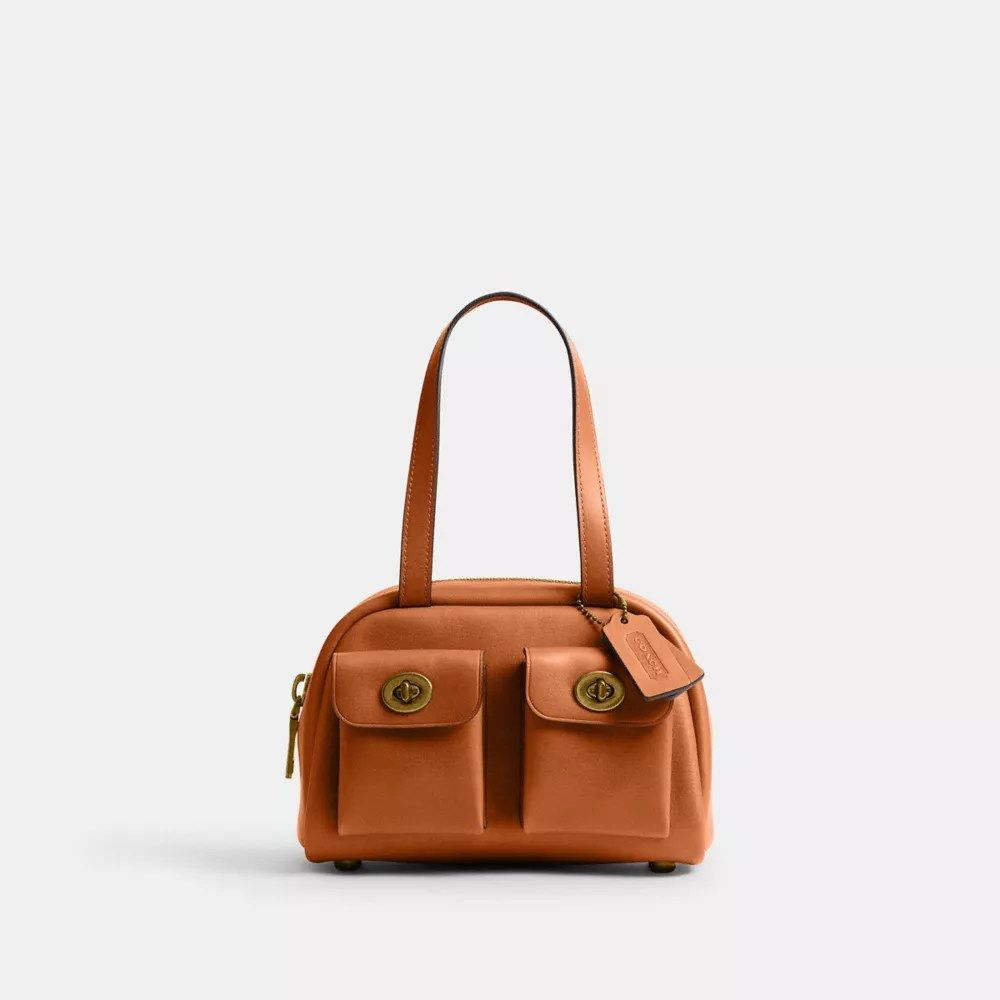 Twin Turnlock Bag 20 (Dark Brass/Toffee)PKR 55,290
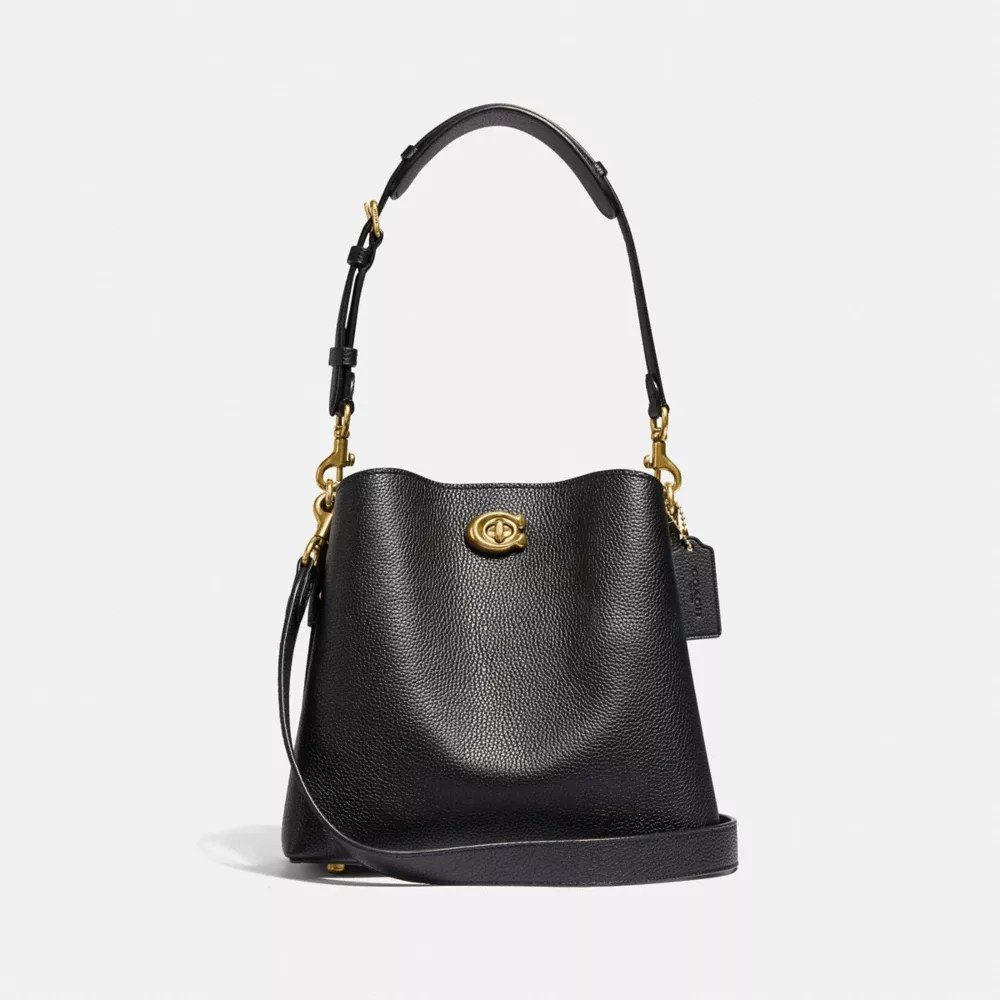 Willow Bucket Bag (Black/Brass)PKR 51,410
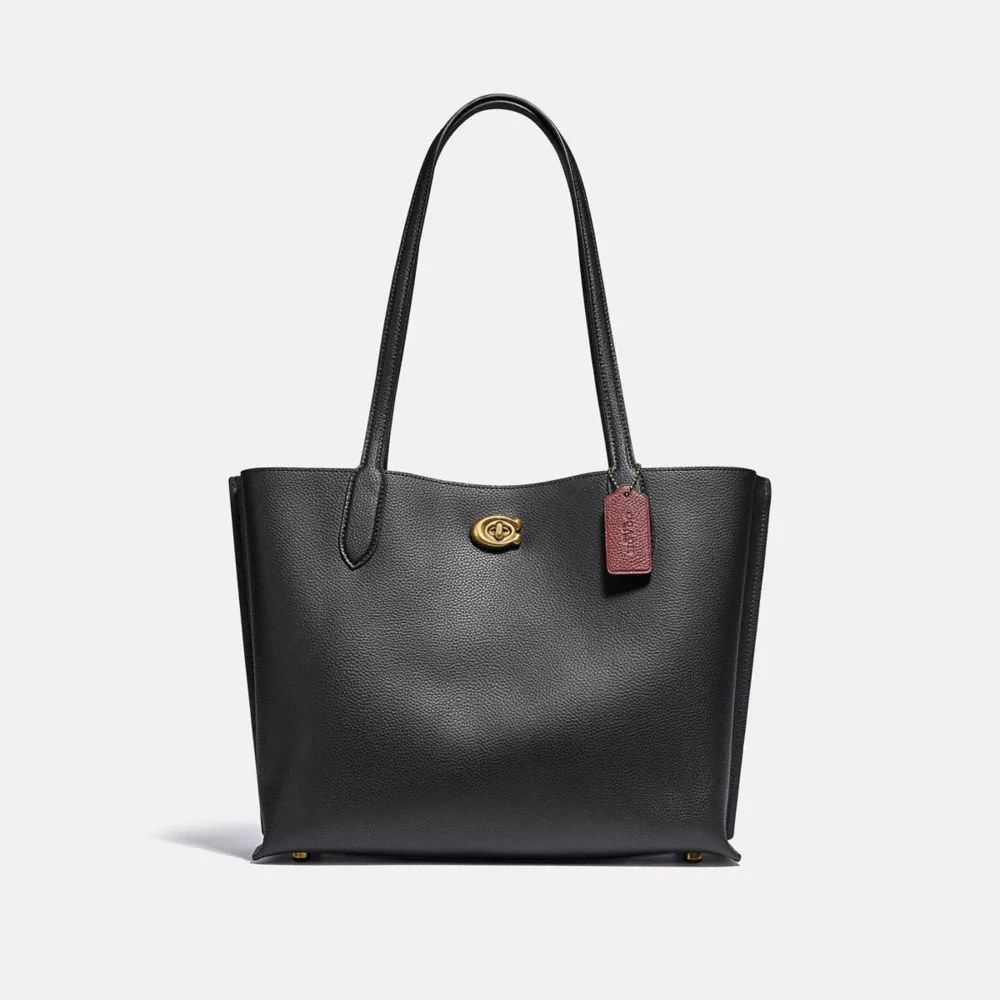 Willow Tote Bag (Brass/Black)PKR 53,350
1972: "It's not a Coach bag without the Coach tag"
In 1972, Coach introduced its leather hangtag, a small tag hanging from each bag as a badge of authenticity. It has been on Coach bags ever since, and in the 1980s Coach's advertising made it a promise: it's not a Coach bag without the Coach tag. Alongside the turnlock and the brand's horse and carriage logo, the hangtag became one of the house codes that made a Coach bag recognisable at a glance.
Those codes matter more than they might seem. In a market full of copies, they gave customers a way to recognise the real thing, and they gave the brand a visual identity that has survived every change of fashion since.
Coach's house codes, decoded
Over its first decades, Coach built up a set of details that collectors and authenticators still use to recognise and date its bags. Knowing them makes any Coach bag, old or new, more interesting.
- The creed. Many Coach bags from the 1970s through the 2000s carry a leather patch inside, the "creed", embossed with a short statement about the bag's leather and craftsmanship and, on most, a serial number. Collectors use the format of the creed and its number to date vintage bags. The earliest Coach bags, from the brand's first New York years, often have only a small Coach stamp instead of a full creed, and some bags from around 1980 to 1983 had serial numbers on glued-in patches.
- "Made in USA". Vintage Coach bags from the brand's early decades were made in the United States, and that stamp, with full-grain leather, solid brass hardware and raw suede interiors, is part of what makes them collectable today.
- The horse and carriage. Coach's logo, a horse-drawn carriage, appears on hardware, linings and patches.
- The hangtag (1972) and the turnlock (the Bonnie Cashin era) are the two codes most people recognise without knowing their history.
- The storypatch. On many current bags, Coach places a small patch or tag inside that tells the story of the materials and the design, a modern continuation of the creed.
- The style number. On current bags, a fabric tag inside carries a style number that matches the bag and material on Coach's own website, the most useful single check for authenticity today.
Bonnie Cashin's own bags are a special case for collectors: genuine Cashin designs, such as her Hasp Bag of 1973 with its distinctive hook-and-eye closure, usually have her particular lining or a small tag with her name.
Growth: Madison Avenue, Sara Lee and the 1980s
By 1979, when Lew Frankfort joined as vice-president of business development, Coach was a solid wholesale business with about US$6 million in sales, mostly in the north-east of the United States. Frankfort would shape the company for the next three decades.
In 1981, Coach opened its first directly operated store, on Madison Avenue in Midtown Manhattan. Selling directly to customers, rather than only through department stores, changed the business, letting Coach control how its bags were presented and building direct relationships with its customers.
In 1985, the Cahns sold Coach to Sara Lee Corporation for a reported US$30 million. They had other plans: in 1983 they had started Coach Farm, a goat dairy in upstate New York, and they turned their attention to cheese-making. Under Sara Lee, with Frankfort as president, Coach expanded quickly. By November 1986 it operated twelve stores and nearly fifty boutiques inside department stores.
The Cahns after Coach
The couple who built Coach left fashion behind entirely. At Coach Farm in upstate New York, which they had started in 1983, Miles and Lillian Cahn turned to making goat's cheese, and the farm became well known in its own right. Lillian Cahn died in 2013. Miles Cahn died in 2017, aged 95, having lived to see the small leather workshop he ran become one of the best-known accessory brands in the world.
Lew Frankfort's three decades
If the Cahns created Coach, Lew Frankfort scaled it. He joined in 1979, when Coach's sales were about US$6 million, ran it as president under Sara Lee, became chairman and chief executive in 1996, and led it through its public listing in 2000 and its expansion across the United States and Asia. By 2013, the business he had joined as a small wholesaler had sales of about US$5 billion. Few executives have shaped a fashion brand for so long.
Reed Krakoff and the Signature C
In 1996 Frankfort became Coach's chairman and chief executive, and in 1997 he hired designer Reed Krakoff. Krakoff's mission was to make Coach bags more functional, lighter and more stylish, and to turn a respected American leather company into a global fashion brand. He did.
The most visible symbol of that era was the Signature pattern: Coach's interlocking Cs, printed on coated canvas. In the 2000s, Signature canvas bags became some of the most recognisable accessories in the world, and the C pattern became, for many people, simply what Coach looked like. Coated canvas also made Coach bags lighter, tougher and more affordable than all-leather bags, which helped the brand reach far more customers.
In June 2000 the company was renamed Coach, Inc., and in October 2000 it went public. Sara Lee completed its exit in April 2001. Through the 2000s Coach grew enormously, expanding across the United States and into Asia, especially Japan. By 2013 it had sales of about US$5 billion and roughly a thousand locations worldwide.
Signature canvas today
Signature canvas is still central to Coach, now in many colours and combinations: classic tan and brown, walnut and black, chalk, powder pink, rainbow and colourblock. It remains one of the most practical choices for a hard-working bag, light, water-resistant and very durable.
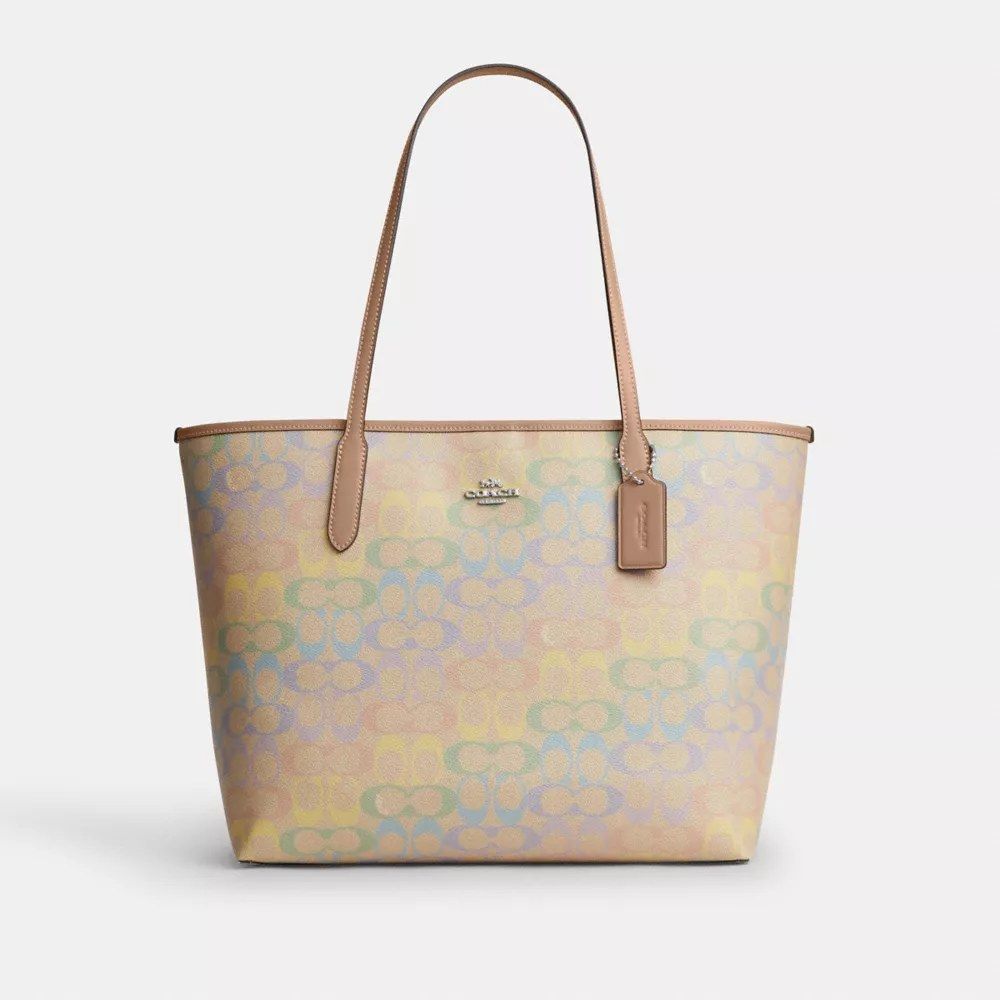 City Tote Bag In Rainbow Signature Canvas (Silver/Sand Multi)PKR 58,200
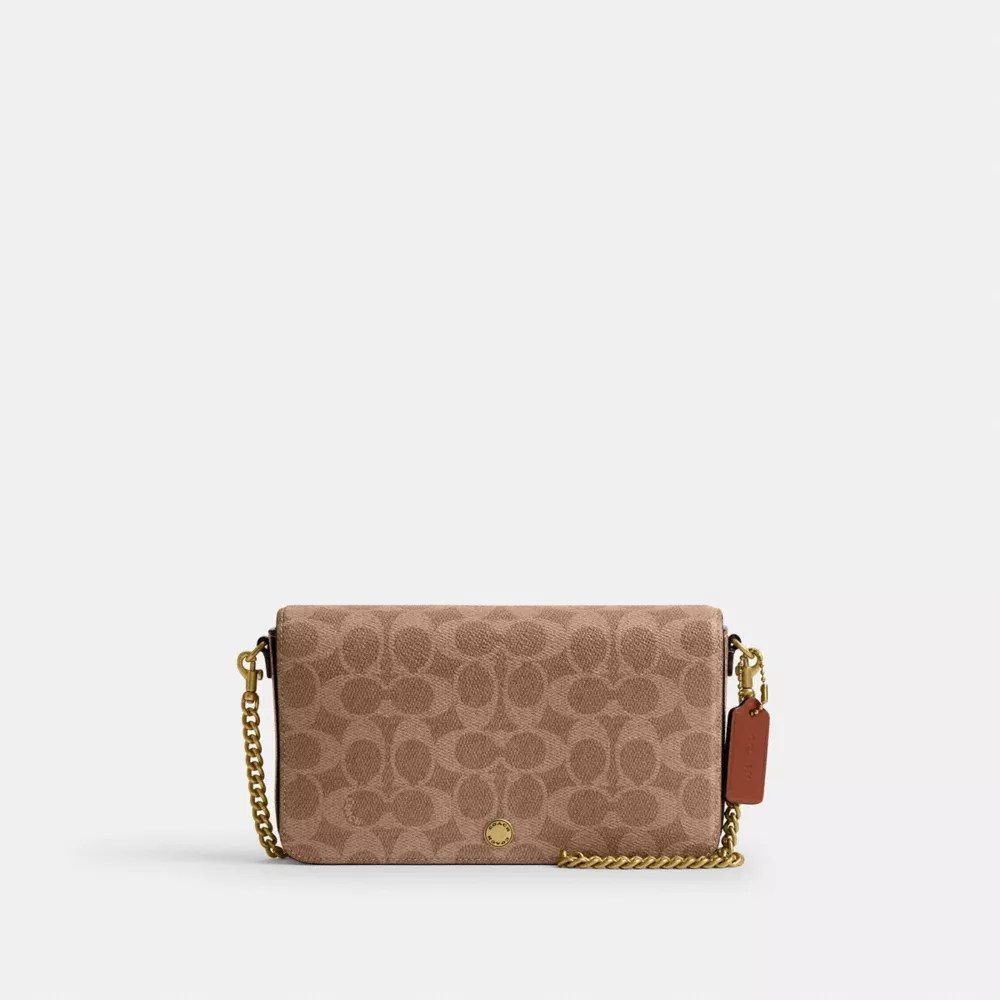 Mila Crossbody Bag In Signature Canvas (Tan/Caramel)PKR 55,290
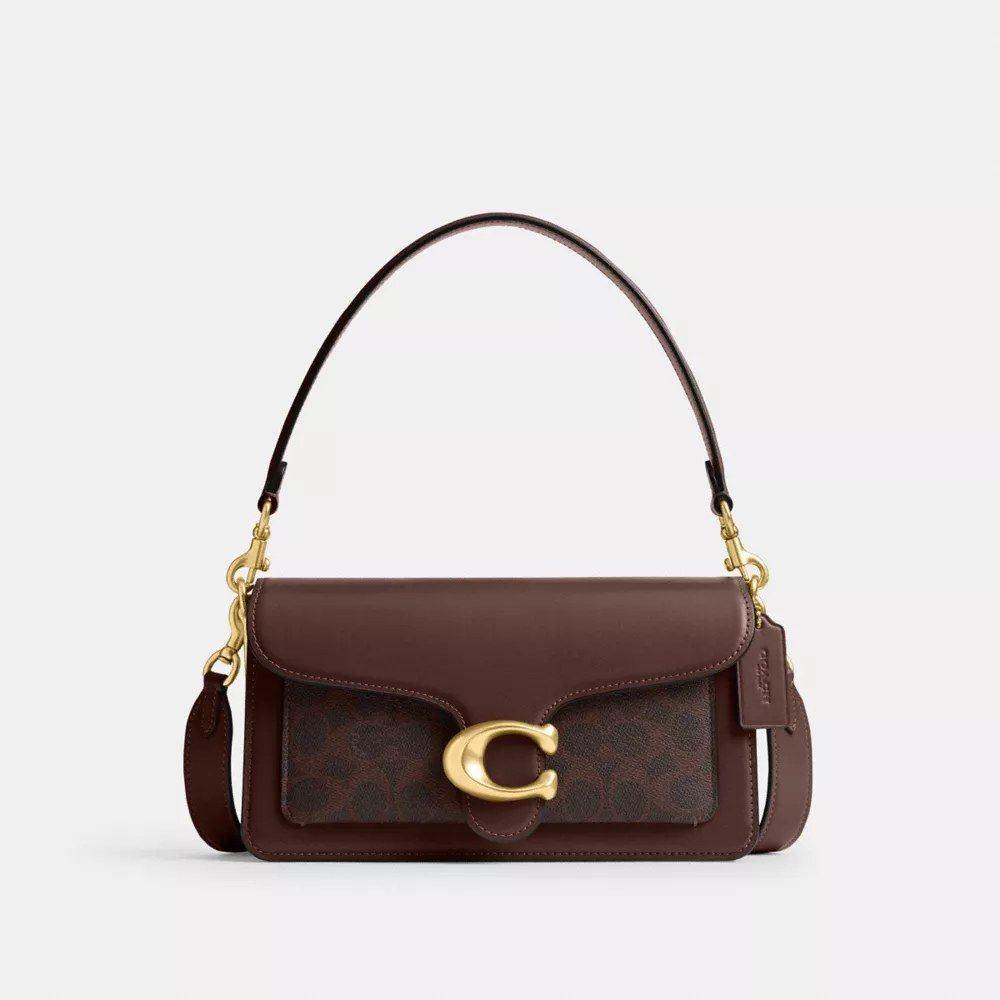 Tabby Shoulder Bag 26 In Signature Canvas (Maple)PKR 63,050
Coach and the outlet business
Coach's growth in the 1990s and 2000s also came from a large network of outlet stores, which sell a mix of past-season pieces and products made specifically for the outlets, usually simpler designs at lower prices. Coach Outlet became one of the biggest outlet businesses in fashion, and it brought Coach to millions of customers.
It also created a tension that Coach still manages today. Constant discounting can make a brand feel ordinary, and for a while Coach's ubiquity worked against its desirability. Much of the Vevers era has been about restoring that desirability at full price, through design, the archive and new icons like the Tabby, while the outlet business continues alongside. We explain the differences between Coach's full-price and outlet products in detail in our guide to outlet vs full price.
Stuart Vevers and the return to the archive
By the early 2010s, Coach faced a problem. The Signature logo was so widespread, and Coach was so available, including through its outlet stores, that the brand risked feeling ordinary. In June 2013 Coach appointed Stuart Vevers, a British designer who had been creative director of the Spanish leather house Loewe, as its executive creative director.
Vevers took Coach back into its archive. He revived heritage leathers and hardware, reinterpreted shapes from the Bonnie Cashin era and the 1970s, and built a more fashion-led identity around Coach's New York roots. Under him:
- Coach 1941, a higher-priced ready-to-wear line named for the founding year, launched in 2015;
- Coach celebrated its 75th anniversary in 2016 and opened Coach House, a 20,000-square-foot flagship on Fifth Avenue;
- Coach dropped fur from its collections in 2019 and named Jennifer Lopez a global ambassador;
- and, most importantly for today's customers, Coach created the Tabby.
2019: the Tabby
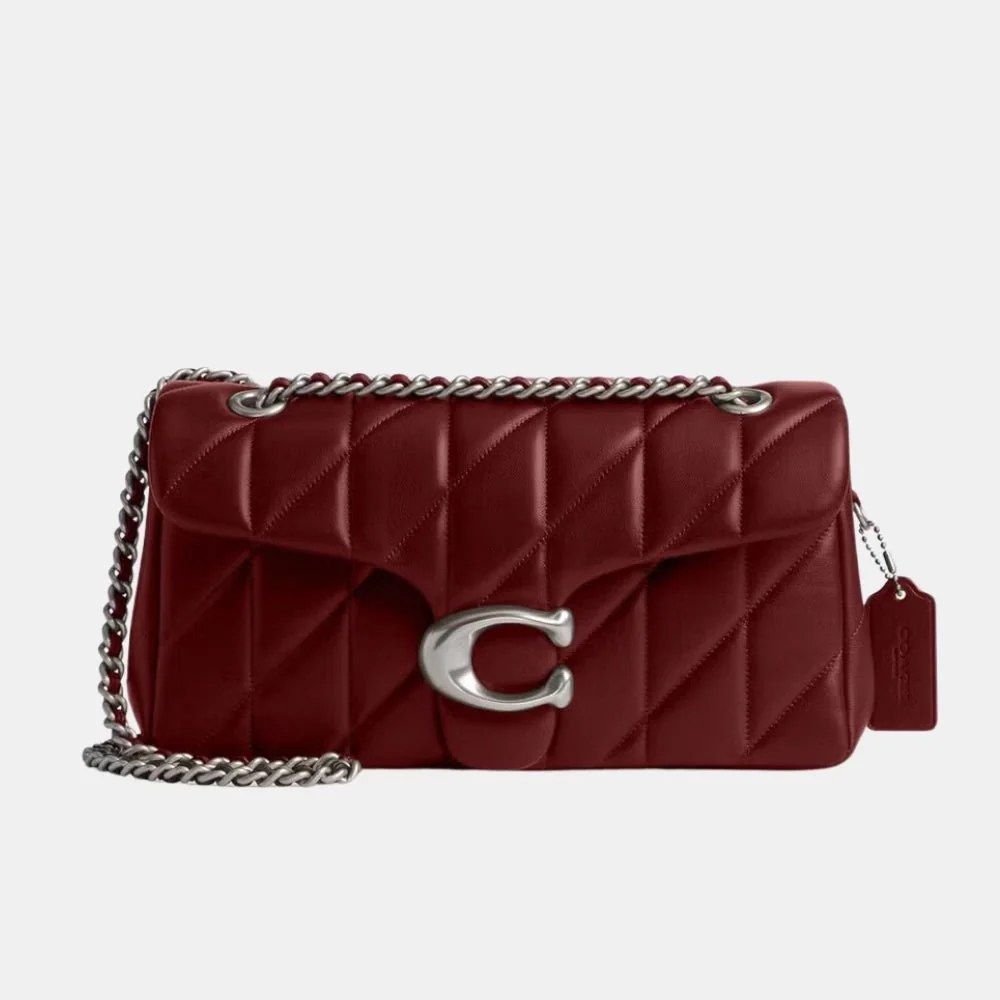
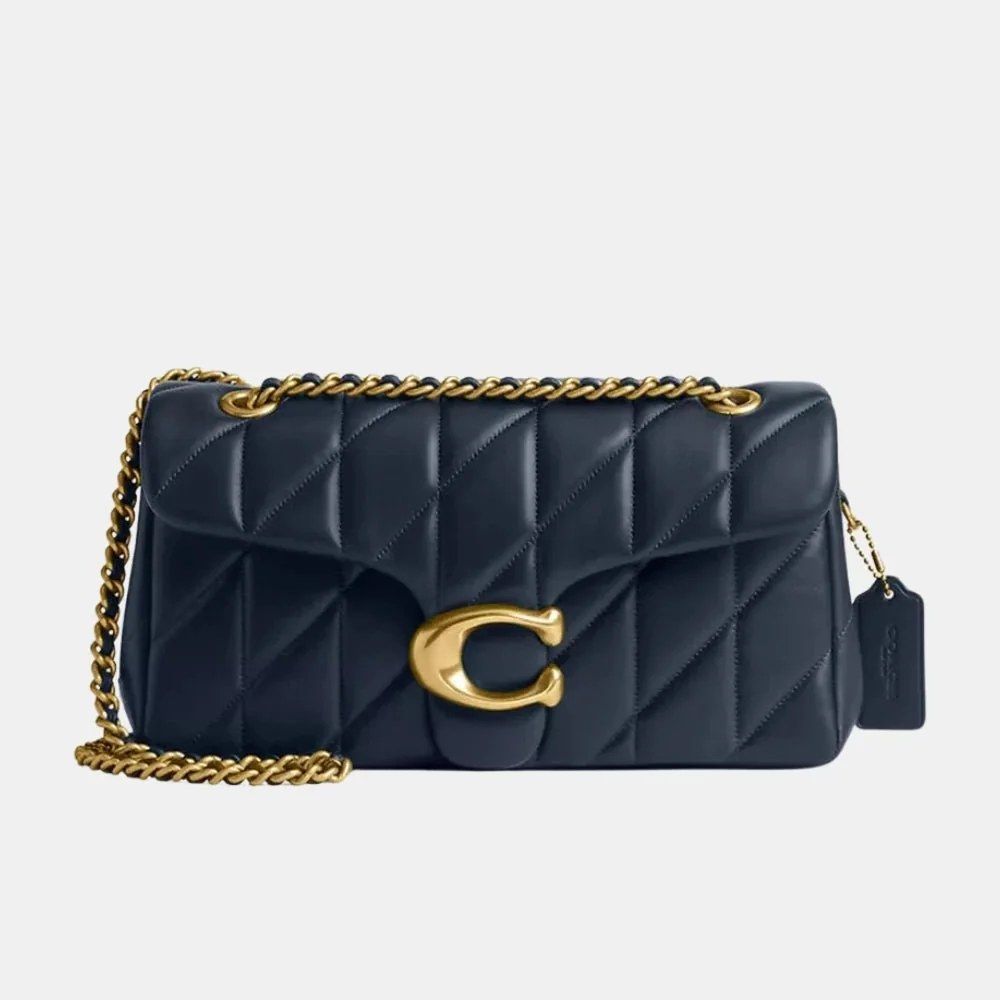
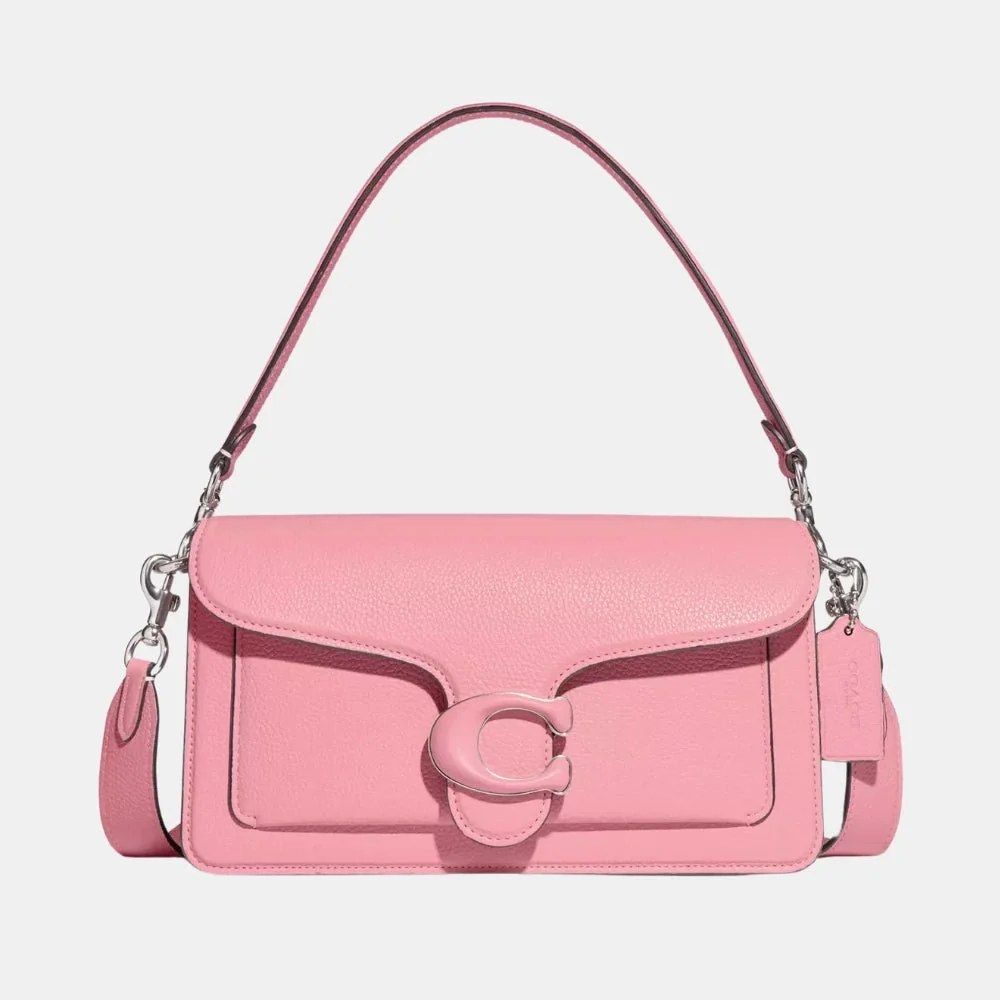
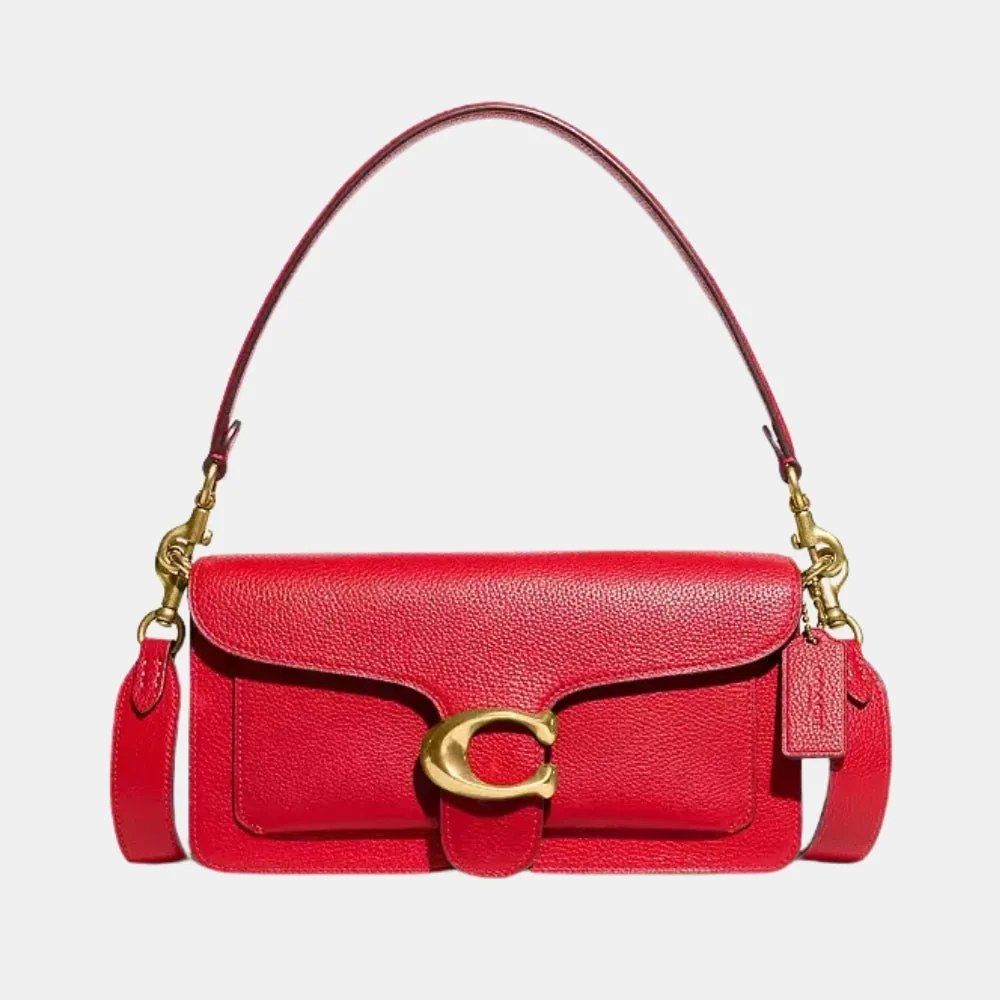
In its Fall 2019 collection, Coach introduced the Tabby, a structured, multi-way shoulder bag based on a 1970s design from Coach's archive and named after its tab-shaped flap with the Signature C hardware. It was an immediate hit, and it has been at the centre of Coach's campaigns ever since.
In 2021 Coach added the Pillow Tabby, a soft, quilted version in nappa leather, which Coach's design team has said came out of the early days of the pandemic, when they wanted a soft bag you could hold close like a pillow. The #CoachTabby hashtag has passed tens of millions of views on TikTok, and Coach's parent company has repeatedly named the Tabby as a driver of its growth.
The Tabby shows how Vevers's approach works: take something from Coach's past, make it right for now, and let customers make it their own. For a detailed guide to the Tabby's sizes, read our Coach Tabby 20 vs 26.
Campaigns and faces
Coach's advertising has helped tell its story at every stage. In the 1980s it built its reputation around the hangtag and the promise of authenticity. In 2016, for its 75th anniversary, it partnered with the singer and actress Selena Gomez. In 2019 it named Jennifer Lopez a global brand ambassador. And the Tabby was launched with a campaign shot by the photographer Juergen Teller under the title "Dream It Real", which captured the brand's renewed sense of fun.
Today Coach's marketing leans heavily on social media and community, from TikTok, where the Tabby and the cherry charm spread, to in-store events and customisation, reflecting how younger customers discover brands.
The New York family
Alongside the Tabby, Coach has built a family of bags named for its home city: the Brooklyn, a soft, slouchy shoulder bag; the Chelsea, a structured shoulder bag; and the Empire, a polished carryall. The names are a reminder of the brand's roots in Manhattan lofts and Madison Avenue, and Tapestry has credited the Tabby and the New York families with driving Coach's recent growth.
Brooklyn Shoulder Bag 28 (Dark Stone)PKR 67,900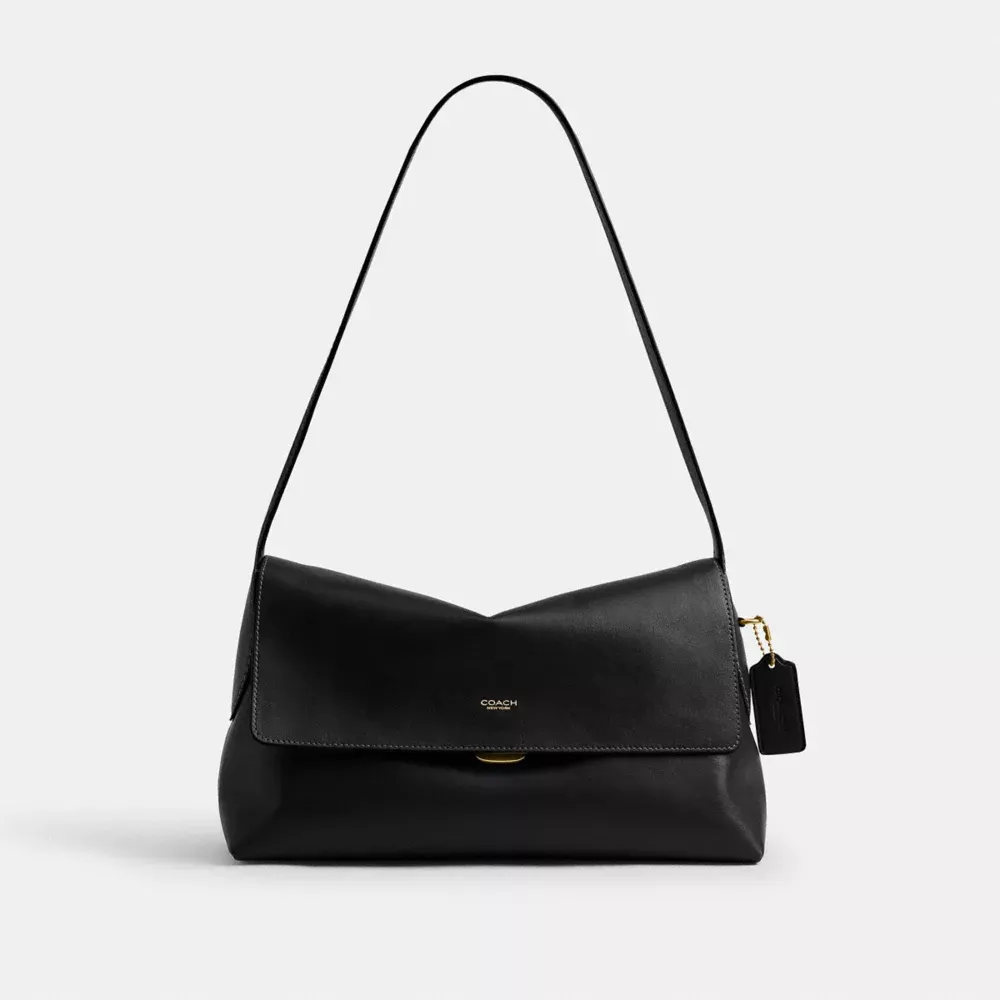 Chelsea Shoulder Bag 30 (Black)PKR 67,900
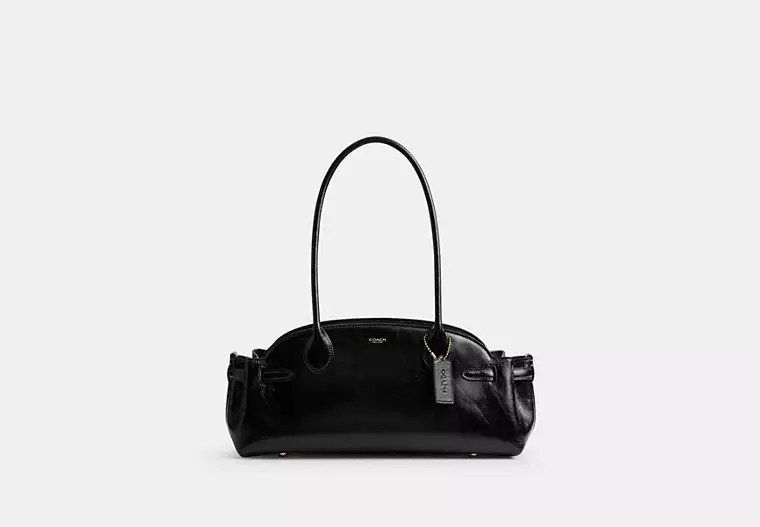 Empire Carryall Bag 34 (Black)PKR 66,930
From Coach to Tapestry
In 2015 Coach bought the shoemaker Stuart Weitzman, and in July 2017 it bought Kate Spade for US$2.4 billion. With three brands under one roof, the company renamed itself Tapestry, Inc. on 31 October 2017, to signal that it had become a multi-brand house rather than a single brand. The bags still say Coach; Tapestry is the company that owns them. In 2025 Tapestry sold Stuart Weitzman to the footwear group Caleres, completing the sale in August, to concentrate on Coach and Kate Spade.
In 2023 Tapestry agreed to buy Capri Holdings, owner of Michael Kors, Versace and Jimmy Choo, a deal that would have brought several of Coach's direct competitors under the same roof. The US Federal Trade Commission sued to block it, arguing it would reduce competition in accessible luxury handbags. In October 2024 a US court granted the FTC a preliminary injunction, and in November 2024 the two companies terminated the deal. Coach remained the core of Tapestry, and Michael Kors remained a separate competitor.
Sustainability: (Re)Loved and Coachtopia
In October 2021, Coach faced criticism after a viral TikTok video showed deliberately slashed Coach bags that had been returned and were being destroyed. Coach responded within days, saying it had stopped destroying returned damaged and unsellable goods and would repurpose, recycle and reuse them instead.
Coach had already launched Coach (Re)Loved in 2021, a programme of repair, restoration, upcycling and trade-in, with restored vintage bags, remade pieces and a trade-in scheme that gives customers credit for old Coach bags. In 2023 it added Coachtopia, a sub-brand built around circular design, using waste materials and designing products to be taken apart and remade. Coach also trains craftspeople through an apprenticeship programme to do this work.
For customers, it means a Coach bag can have a long life: repaired, restored, traded in or remade, rather than thrown away.
Coachtopia in more detail
Coachtopia, launched in April 2023, is worth a closer look because it shows where Coach thinks the future lies. It was co-created with a community of Gen Z members and built on what Coach calls its Made Circular design philosophy. Its leathers are made from production waste or recycled material, including leather scraps from tanneries; its products are designed to be repaired, repurposed or recycled; and each product carries a digital passport, read through an embedded NFC chip, that tells the customer where its materials came from and the journey the product has taken. It's a small sub-brand, but a serious experiment in how a leather-goods house can reduce waste.
Vintage Coach: why older bags are collected
Coach's long history means there's a thriving market in vintage Coach bags, and it's one of the friendliest entry points into vintage designer fashion.
Collectors prize bags from the 1960s to the 1990s for their durable glovetanned leather, full-grain construction, solid brass hardware, simple timeless shapes and, often, the "Made in USA" stamp. Bonnie Cashin's designs are especially sought after for their design history. Many vintage Coach bags are still in excellent condition decades later, a testament to the leather Miles Cahn developed.
If you're tempted by vintage:
- Learn the codes. The creed, serial number format and hardware help date a bag and confirm it's genuine.
- Check the leather. Vintage glovetanned leather can be revived with cleaning and conditioning, but cracks and tears are harder to fix.
- Check the hardware and stitching, especially on straps and handles, which take the most strain.
- Buy from sellers who authenticate, or from Coach's own (Re)Loved programme, which sells restored vintage Coach bags.
Coach's leathers through the decades
The materials Coach uses tell their own history.
- 1950s: glovetanned leather, inspired by baseball gloves, becomes the foundation.
- 1960s and 1970s: under Bonnie Cashin, Coach adds colour and more varied leathers to its practical designs.
- 1990s and 2000s: pebble leather and crossgrain leather, which resist scratches, join glovetanned, and Signature coated canvas becomes the brand's best-known material.
- 2010s and 2020s: under Stuart Vevers, Coach expands its range to soft nappa (the Pillow Tabby), suede, Signature jacquard, chambray, denim and recycled leather, and revives heritage finishes such as waxed smooth leather on the archive-inspired Originals.
In our shop today, you can see almost the whole history in one place: glovetanned Honey Brown Tabbys, polished pebble Tabbys, crossgrain on the Klare, Signature canvas on dozens of bags, quilted nappa Pillow Tabbys, suede Empires and Gramercys, jacquard on the Twin Turnlock Waverly and recycled leather in the striped Teri Hobo.
Coach today: "expressive luxury"
Today Coach describes itself as a house of expressive luxury: real craftsmanship and leather at prices well below the European luxury houses, with design that invites customers to express themselves, through charms, straps, colours and personalisation. It has been working: Coach has led Tapestry's results through 2025 and 2026, winning millions of new customers, many of them from Gen Z, and keeping more of them than any other age group.
That's a remarkable position for a brand founded more than eighty years ago, in a single loft, by six people working leather by hand. Where many heritage brands struggle to reach younger customers, Coach's Tabby, charms and New York bags have made it one of the most talked-about accessory brands among them.
Coach's iconic bags, in order
A short list of the bags and pieces that mark each chapter of Coach's story:
- Wallets and billfolds (1941): the products Coach was founded on.
- Sturdy cowhide handbags (1950s): Lillian Cahn's idea, and an immediate hit.
- Bonnie Cashin's designs (1962 to 1974), including bucket bags and tongue bags with practical pockets and the turnlock, and her Hasp Bag of 1973.
- The 1968 silhouette that today's Twin Turnlock bags are based on.
- Signature canvas bags (2000s): the logo bags that made Coach a global name.
- The Tabby (2019): the modern icon, based on a 1970s archive design.
- The Pillow Tabby (2021): the puffy, quilted Tabby that spread across social media.
- The New York family: the Brooklyn, Chelsea and Empire.
- The Cherry Bag Charm (2024): the small piece that became a Gen Z favourite, followed by the 2025 cherry collection. Read our guide to the Coach cherry bag.
What Coach does well, and where it has been criticised
A fair history includes both.
Strengths. Coach has always been good at leather: its glovetanned leather, pebble leather and coated canvas are tough and age well. It has repeatedly reinvented itself, from wholesale workshop to Madison Avenue brand, from logo canvas to archive-inspired design. Its prices give real craftsmanship to people who could never consider the European luxury houses. And it has moved earlier than many brands into repair, restoration and circular design.
Criticisms. In the 2000s, Coach's logo became so widespread, and its outlet business so large, that the brand risked feeling ordinary. Its outlet products are simpler than its full-price bags, a difference that isn't always clear to shoppers. And in 2021 it was criticised, rightly, for destroying returned goods, a practice it stopped within days of the controversy.
The current Coach, with its focus on design, full-price icons and circularity, is in part a response to those criticisms.
Why Coach suits life in Pakistan
There are practical reasons Coach is such a good fit for buyers here.
- Durability in a tough climate. Pebble leather, crossgrain and coated canvas cope well with heat, dust and the occasional monsoon downpour, and they don't need delicate care.
- Real leather at an accessible price. Coach sits well below the European luxury houses in price, so a genuine designer bag is within reach for far more people.
- Gifting. Coach bags, small leather goods and charms are some of the most giftable designer pieces, for Eid, weddings, birthdays and graduations, at a range of budgets.
- Versatility. Most Coach bags come with two straps and work with both Western and Pakistani clothing, from office wear to lawn and wedding outfits.
What Coach's history means for the bag you buy
History isn't only interesting; it's practical. Each chapter of Coach's story shows up in the bags you can buy today.
- Glovetanned leather (1950s): choose it if you want a bag that ages and improves, like the Honey Brown Tabby.
- The turnlock (1960s, Bonnie Cashin): choose bags like the Willow and Twin Turnlock if you love heritage hardware.
- Practical design (Cashin's pockets and purses): almost every Coach bag today has outside pockets, multifunction pockets and card slots because of that philosophy.
- The hangtag (1972): look for it on your bag as a mark of the brand's authenticity tradition.
- Signature canvas (2000s, Reed Krakoff): choose it for a light, tough, practical bag.
- The archive revival (2013 onwards, Stuart Vevers): the Tabby, the Twin Turnlock and the Coach Originals collection bring classic shapes back for today.
- Circular design (2021 onwards): Coach's repair and restoration programmes mean a good Coach bag is worth looking after for the long term.
Reading a Coach bag like a historian
Pick up a Coach Tabby and you can read eighty years of history in it.
- The leather comes from the 1950s: if it's glovetanned, it's Miles Cahn's baseball-glove leather; if it's pebble leather, it's the hard-wearing finish that joined it later.
- The shape comes from the 1970s: Stuart Vevers based the Tabby on a design from Coach's archive of that decade.
- The C on the flap echoes the 2000s, when Reed Krakoff's Signature C became the brand's best-known mark.
- The pockets (the outside slip pocket, the inside zip and multifunction pockets) follow Bonnie Cashin's 1960s belief that a bag should organise what it carries.
- The hangtag, if your bag has one, is a 1972 idea.
- The style number inside is the modern descendant of the creed patch, the way you check that your bag is the real thing.
Every Coach bag is, in a small way, a summary of the company's story.
Is Coach a luxury brand?
It's accessible luxury: real leather, real design and real heritage at prices far below Hermès, Chanel or Louis Vuitton. Coach sits in the same tier as Tory Burch and Michael Kors, and Coach itself prefers the term "expressive luxury". For a deeper discussion, including why Coach is sometimes seen as cheap and how the outlet business fits in, read Coach, honestly and our guide to outlet vs full price.
How to tell a genuine Coach bag
A brand as successful as Coach is heavily copied. Its history gives you the tools to check:
- The style number on the inside tag, which should match the bag and material on Coach's website.
- The hardware: heavy, cleanly finished turnlocks, C hardware and zips, crisply engraved.
- The leather and canvas: genuine glovetanned and pebble leather feel substantial; Signature canvas has a crisp, symmetrical, well-aligned C pattern.
- The stitching: small, even and straight.
- The details Coach has used for decades: the quality of the hangtag, the creed or tag inside, the finish of the edges.
- The seller: buy from someone who can tell you exactly where the bag came from.
Coach at ULVARE
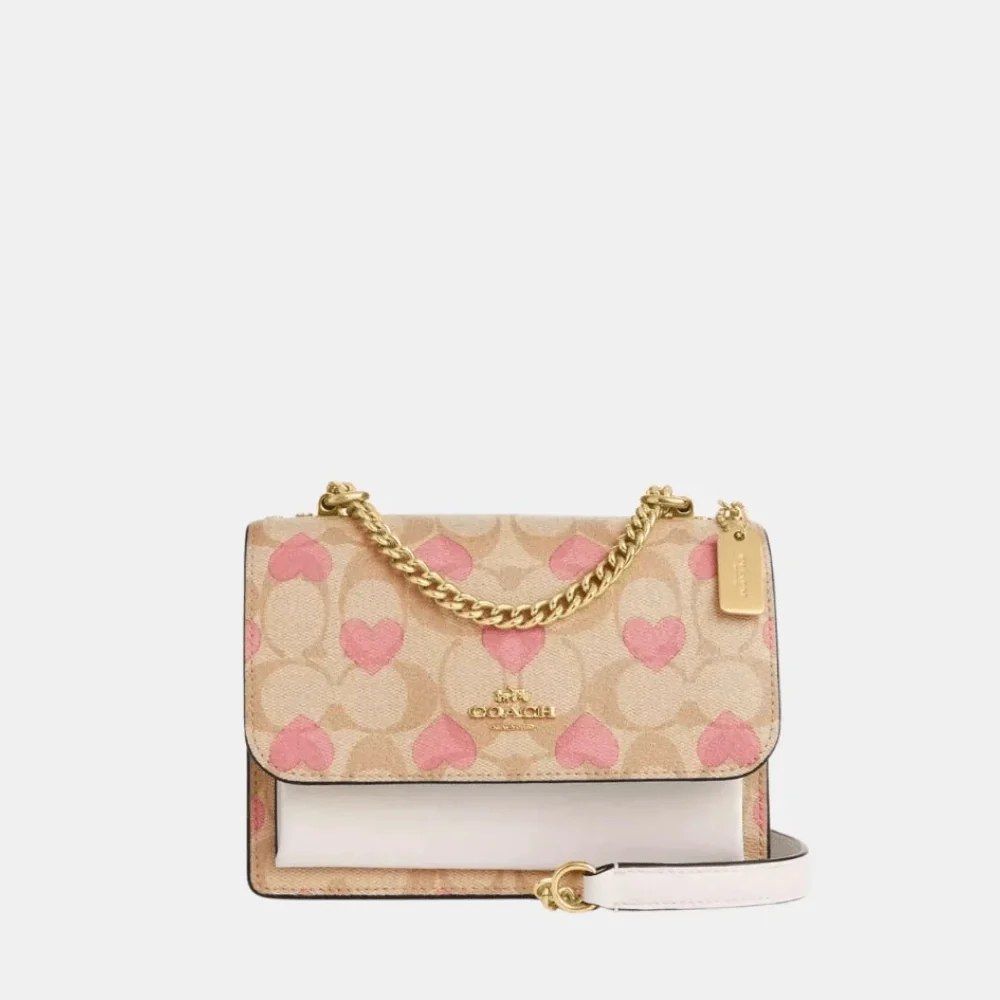
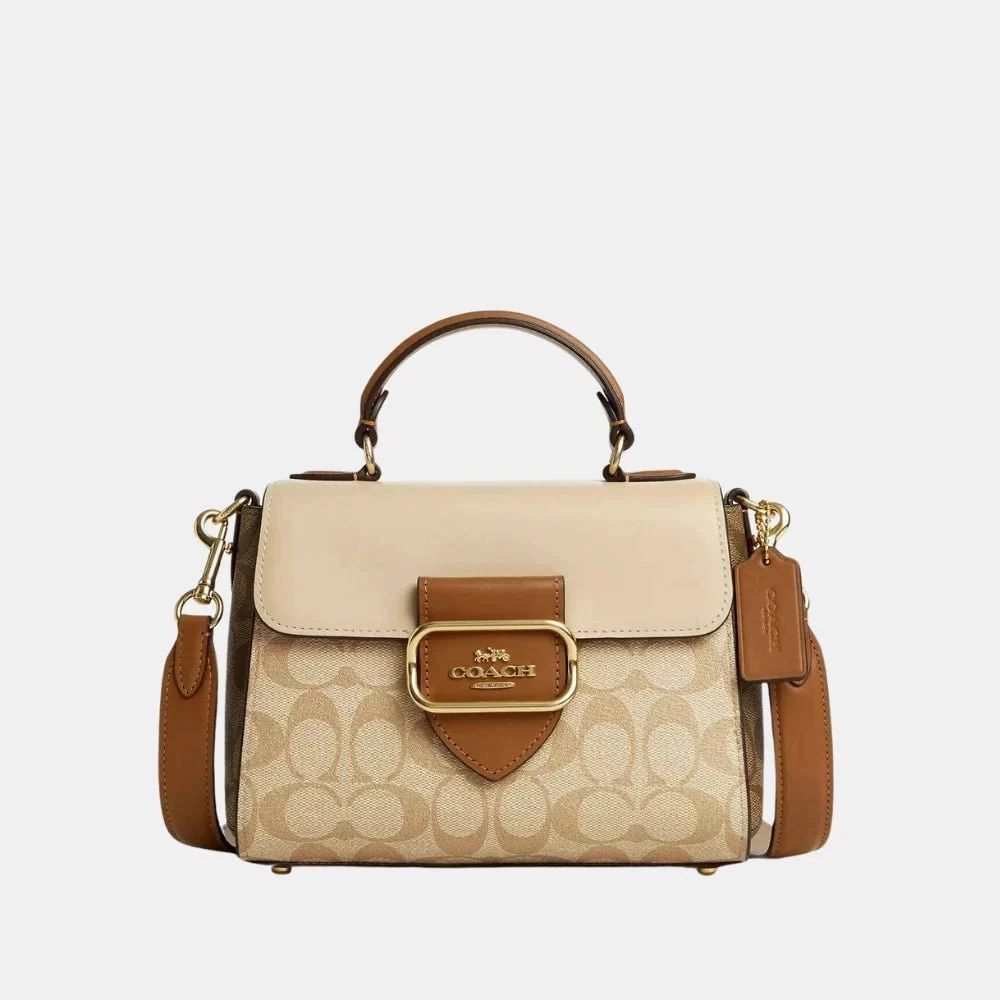
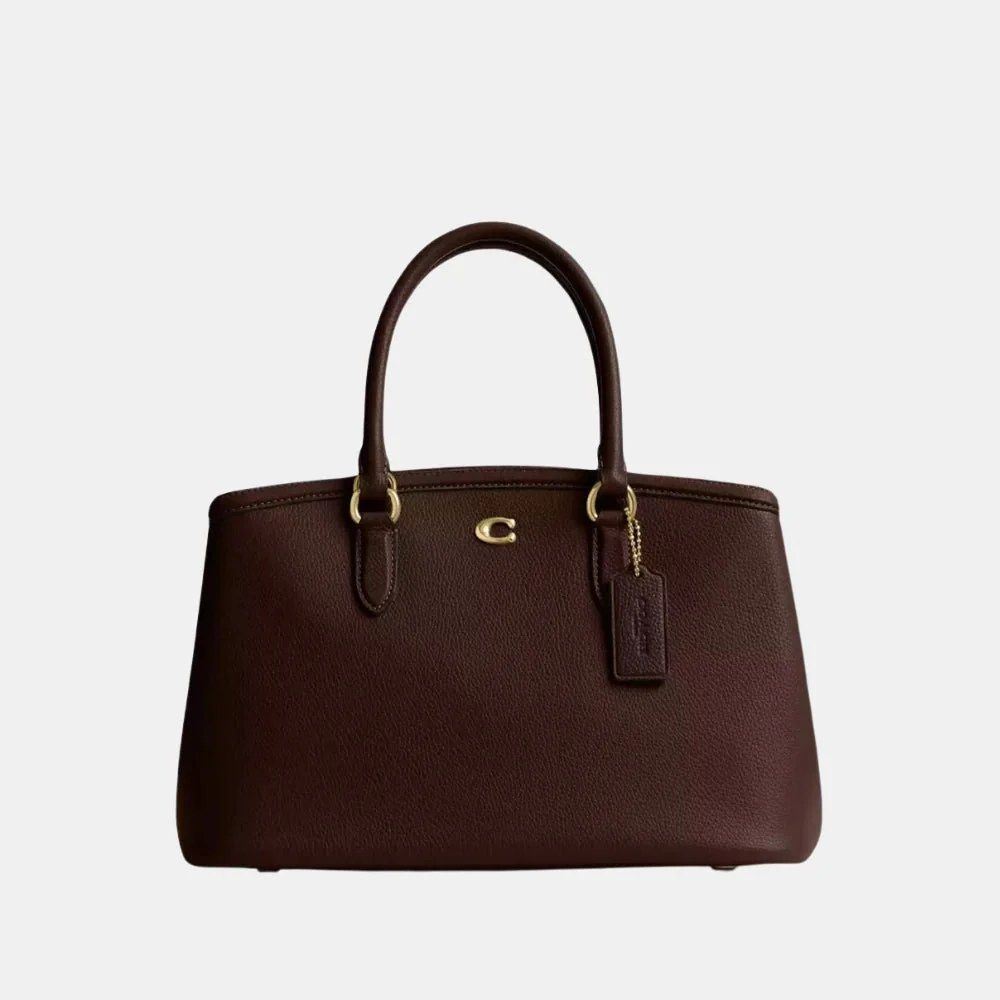
We carry Coach from both its full-price collection and Coach Outlet: the Tabby in every size and leather, the Brooklyn, Chelsea and Empire, the Teri, the Willow and Twin Turnlock with their turnlocks, Signature canvas totes and crossbodies, small leather goods and charms. Every piece is bought from official retailers, checked by hand and video-recorded before it ships, and delivery is free anywhere in Pakistan.
Frequently asked questions
When was Coach founded?
Coach was founded in 1941 as a family-run leather workshop in a loft on 34th Street in Manhattan, New York.
Who founded Coach?
Coach began as a family workshop of six leather-workers. Miles Cahn, who was running the business by 1950, and his wife Lillian Cahn, who joined in 1946, built it into the Coach brand, completing a buyout of the company in 1961.
Why is it called Coach New York?
Coach was founded and is still headquartered in New York, and the brand emphasises its New York heritage, from its 34th Street origins and first Madison Avenue store to bags named after the Empire, Brooklyn and Chelsea.
What is Coach glovetanned leather?
It's Coach's signature leather, developed after Miles Cahn noticed how baseball gloves became softer and more supple with use. It's full-grain leather finished to be soft and supple, and it develops a patina with age.
Who designed Coach's turnlock?
The turnlock was introduced by designer Bonnie Cashin, who led Coach's design from 1962 to 1974. It was inspired by the fastenings on convertible car roofs.
When did Coach introduce the hangtag?
In 1972, as a badge of authenticity.
Who owns Coach?
Coach is owned by Tapestry, Inc., the company formerly called Coach, Inc., which also owns Kate Spade.
Who is Coach's creative director?
Stuart Vevers, who joined in June 2013 from Loewe.
When did the Coach Tabby come out?
In Coach's Fall 2019 collection. The quilted Pillow Tabby followed in 2021.
Did Coach buy Michael Kors?
No. Tapestry agreed in 2023 to buy Capri Holdings, Michael Kors's owner, but the US Federal Trade Commission sued to block the deal, a court granted a preliminary injunction in October 2024, and the companies terminated the deal in November 2024.
Is Coach still made in New York?
Coach's design and headquarters are in New York, but like most global fashion brands its bags are made by manufacturing partners in several countries. The style details and materials are specified by Coach.
What was Coach's first store?
Coach opened its first directly operated store in 1981, on Madison Avenue in Midtown Manhattan. Before that it sold mainly wholesale, through department stores.
What does Tapestry own besides Coach?
Tapestry also owns Kate Spade, bought in 2017. It owned the shoemaker Stuart Weitzman from 2015 until August 2025, when it completed the brand's sale to the footwear group Caleres to focus on Coach and Kate Spade. Coach is by far its largest brand.
Is Coach an American brand?
Yes. Coach was founded in New York in 1941 and is still headquartered there. Its parent company, Tapestry, is an American company listed on the New York Stock Exchange.
What is Coach 1941?
Coach 1941 was a higher-priced ready-to-wear line launched in 2015 under Stuart Vevers, named after the year Coach was founded.
What is the Coach creed?
It's a leather patch found inside many Coach bags from the 1970s through the 2000s, embossed with a statement about the bag's craftsmanship and usually a serial number. Collectors use it to date and authenticate vintage bags.
What is Coachtopia?
Coachtopia is a circular sub-brand Coach launched in April 2023, using leather made from waste or recycled materials, designed to be repaired and recycled, with a digital passport read through an NFC chip.
Do you deliver Coach across Pakistan?
Yes, free, to every city in Pakistan.
Sources
- Wikipedia, Coach New York and Miles Cahn
- FashionUnited, Miles Cahn, co-founder of Coach, passes away at 95
- Coach, Coach story and Stuart Vevers biography
- Coach, Hangtag and storypatch design spotlight
- PurseBlog, The Coach Tabby bag guide
- BNN Bloomberg, Coach to rename itself Tapestry Inc. (October 2017)
- Tapestry, Form 10-Q (FY2025) and FashionUnited, Tapestry x Capri merger blocked
- FashionUnited, Tapestry completes sale of Stuart Weitzman to Caleres (August 2025)
- CNN Style via KTVZ, Coach will stop destroying unwanted goods
- Refinery29, Coach (Re)Loved
- Fortune, Coach's "expressive luxury" (May 2026)
- Coach, The Coach Originals
- Tapestry, Introducing Coachtopia (April 2023)
- ShopGoodwill, Vintage Coach bag styles worth collecting