How to Tell if a Coach Bag Is Real: Serial Numbers, Stitching and Size
Coach has no public serial-number lookup and doesn't authenticate bags, so a number alone proves nothing. How to read a Coach creed or style number, what a "10-digit serial number" really is, and the checks that matter more: size, stitching, hardware and price.
In this article (19)
- The short answer
- What a serial number can and can't prove
- Can you look up a Coach serial number?
- Where to find the number on a Coach bag
- How to read an old Coach creed code
- Newer Coach bags: style numbers you can check
- What is a "10-digit serial number"?
- How to check your Coach serial number, step by step
- Why a "correct" serial number proves nothing
- The checks that matter more
- What doesn't prove anything
- Myths you'll hear
- Different kinds of genuine Coach
- Model notes: the Coach bags people ask about most
- What you get from us, honestly
- A ten-minute check on delivery
- Buying secondhand or from someone else
- Frequently asked questions
- Sources
"How do I check if my Coach bag is legit?" Most people who ask have just been offered a Coach bag at a tempting price, or have one arriving soon, and want a quick, certain answer. The answer usually suggested online is the serial number: find it, type it into a website, and get a verdict.
It isn't that simple, and it's better that you know why before you rely on it. Coach has no public database where you can look up a serial number, and Coach itself does not authenticate bags for the public. The number inside a Coach bag can tell you a little about when and how it was made, and it can sometimes catch a careless fake. But a number can be copied as easily as a logo, and many convincing copies carry perfectly plausible codes.
So this guide does two things. First, it explains Coach's numbers honestly: where to find them, how to read the old "creed" codes and the newer style numbers, what an online "serial checker" can and can't do, and what people mean by a "10-digit serial number". Then it covers the checks that tell you far more: measuring the bag against Coach's own dimensions, and looking closely at the stitching, edges, hardware, labels and materials. These are the checks you can do yourself, at home, with a tape measure and good light.
A word about us, because it's relevant. We don't send a box, a "certificate" or any paperwork with your bag to prove it's genuine, and as you'll see below, no such paper would prove much anyway. What we do is buy from official retailers, check every piece and record it on video before it ships. After that, the best proof is the bag itself, which is why we'd rather teach you how to check it than ask you to take our word for it.
The short answer
You can't confirm a Coach bag is real just by looking up its serial number. Coach doesn't run a public lookup, and its brand protection page says it does not respond to requests to authenticate products.
What you can do:
- Find the number inside the bag: on the leather "creed" patch on older bags, or on a small white fabric tag (usually in an inside pocket) on many newer ones.
- Check that it makes sense: the format should fit the bag's era, and on a newer bag, searching the style number should bring up the same model on Coach's site or in retailer listings.
- Then check the bag itself, which matters much more: its measurements against Coach's listing, the stitching, the edges, the weight and engraving of the hardware, the labels and the lining.
- Weigh the price and the seller. A new Coach bag sold far below Coach's own outlet prices, by a seller who can't say where it came from, deserves suspicion whatever its number says.
If the number fits, the size matches and the craftsmanship is right, you can be confident. If any of those is wrong, a correct-looking serial number shouldn't reassure you.
What a serial number can and can't prove
On a phone, a laptop or a watch, a serial number identifies one individual item. The manufacturer records it, so you can check it against a database to see when it was sold, whether it's under warranty or whether it was reported stolen.
Coach numbers don't work that way. On a Coach bag, the number identifies the design (the style) and, on older bags, roughly when and where it was made. Thousands of bags of the same style share the same style number. There is no Coach database you can type it into to learn that "this bag, with this number, was sold in this store on this date".
That has two consequences:
- A correct number doesn't make a bag real. Counterfeiters copy numbers from genuine bags, and the same number often turns up on many copies. A number that matches the style is the minimum, not the proof.
- A strange number can be a warning. A code in the wrong format for the bag's era, a style number belonging to a different model, or a date code from before the bag was designed are all strong reasons to doubt it.
Think of the number as a filter: it can rule a bag out, but it can't rule it in.
Can you look up a Coach serial number?
Not officially. Coach has never published a public serial-number lookup, and its official brand protection page is direct about authentication: Coach "does not respond to requests to authenticate product". The same page lists where genuine Coach is sold: Coach retail and outlet stores, coach.com and Coach's international websites, and authorised department and specialty stores. It also says Coach doesn't sell through flea markets, street vendors or mall kiosks.
You'll find many websites offering a "Coach serial number checker". Some are useful for what they really do, which is decode the format: they read an old creed code and tell you the month and year it implies. None of them has access to Coach's records, because Coach doesn't share any. If a site claims to "verify" your bag from the number alone, treat that claim with care, especially if it then offers a paid authentication.
Some guides also suggest calling Coach customer service with the number. Policies can change, but given what Coach's brand protection page says, don't count on a phone call settling it.
Where to find the number on a Coach bag
Where the number is depends on when the bag was made and what kind of piece it is.
The creed patch (older bags)
For decades, many Coach bags carried a creed: a leather patch stitched inside the bag, embossed with a short statement about Coach's leather and craftsmanship and, on most, a serial number at the bottom beginning "No." It's usually on the inside wall of the main compartment.
On a genuine creed, the lettering is pressed into the leather, with crisp, evenly spaced characters, and the patch is neatly stitched around its edge. Printed or inked lettering sitting on top of the leather is a warning sign.
The white fabric tag (many newer bags)
On many current Coach bags, the number isn't on a leather patch. Look for a small white fabric tag, often tucked inside an interior pocket or along a seam. It typically shows a production code and the style number, sometimes over two lines. Some current bags also carry a small leather or printed patch telling the story of the design and its materials.
Wallets, wristlets and small pieces
Wallets and small leather goods usually have the same kind of small white tag, often inside a card or bill compartment. Very small pieces such as key rings and bag charms may have no number at all, which is normal.
When there's no number
Not every genuine Coach item has a number you can find easily, and a few have none. Some very small items never had one, and on some bags the tag is hidden deep in a seam or pocket. A missing number isn't proof of a fake by itself, but it means you have to rely entirely on the other checks.
How to read an old Coach creed code
Collectors who have studied thousands of Coach bags describe three broad eras of creed codes. Coach has never published an official key, so treat these as collector knowledge rather than Coach's word, and use them to check that a code is plausible, not to "prove" anything.
| Era | Typical format | What the parts mean |
|---|---|---|
| Before about 1994 | A plain number, often like ###-#### | Mostly a style or production number, with no date |
| About 1994 to the mid-2000s | Letter, digit(s), letter, dash, style number | Month letter, year digit, factory letter, then the style number |
| From about 2006 | Letter, four digits, dash, style number (sometimes with an F) | Month letter, two-digit year, two-digit factory code, then the style number |
A few points collectors agree on:
- The month letter runs from A for January onwards. One commonly cited detail is that Coach skips the letter I, which is easily confused with the number 1.
- The year is the digit or digits after the month letter. On a newer code, "12" would mean 2012. A year that is earlier than the design's release is a strong red flag: a bag can't be made before it was designed.
- The style number after the dash identifies the model. It should belong to the bag in your hands, not to a different design.
- An F before the style number has traditionally been associated with bags made for Coach's factory, or outlet, stores. That makes it an outlet design, which is still genuine Coach. It is not a sign of a fake. Our outlet guide explains the difference between outlet and boutique lines in detail.
Here is an illustrative newer-style code, not taken from any particular bag: No. H1269-F19260. Read the collectors' way, H is the month, 12 the year (2012), 69 the factory code and F19260 the style, with the F marking an outlet design. If a code like this sat inside a bag that Coach only introduced in 2019, the dates wouldn't add up, and you'd want to look much more closely.
Newer Coach bags: style numbers you can check
On current bags, the most useful number is the style number, because you can check it against Coach's own website and against retailers.
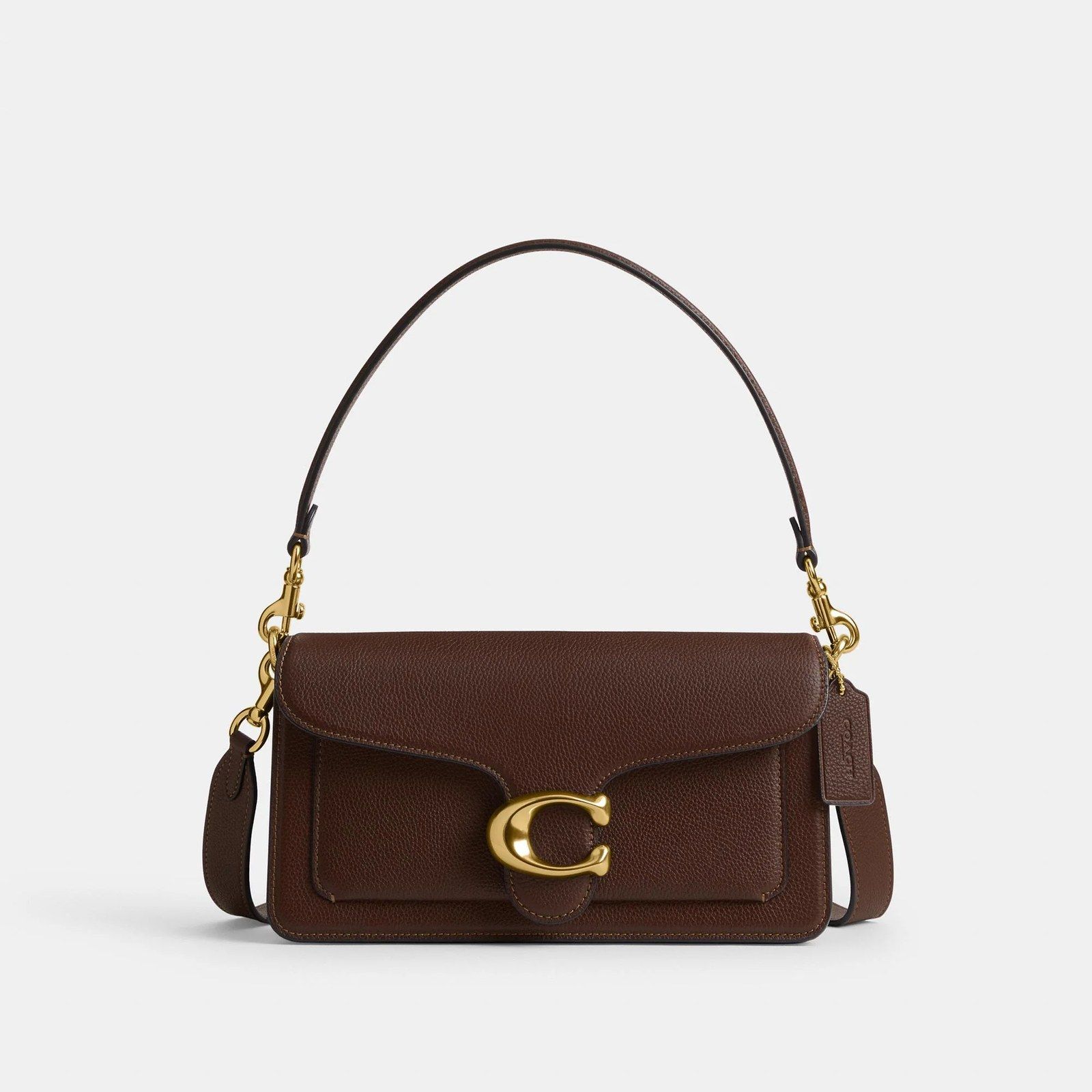
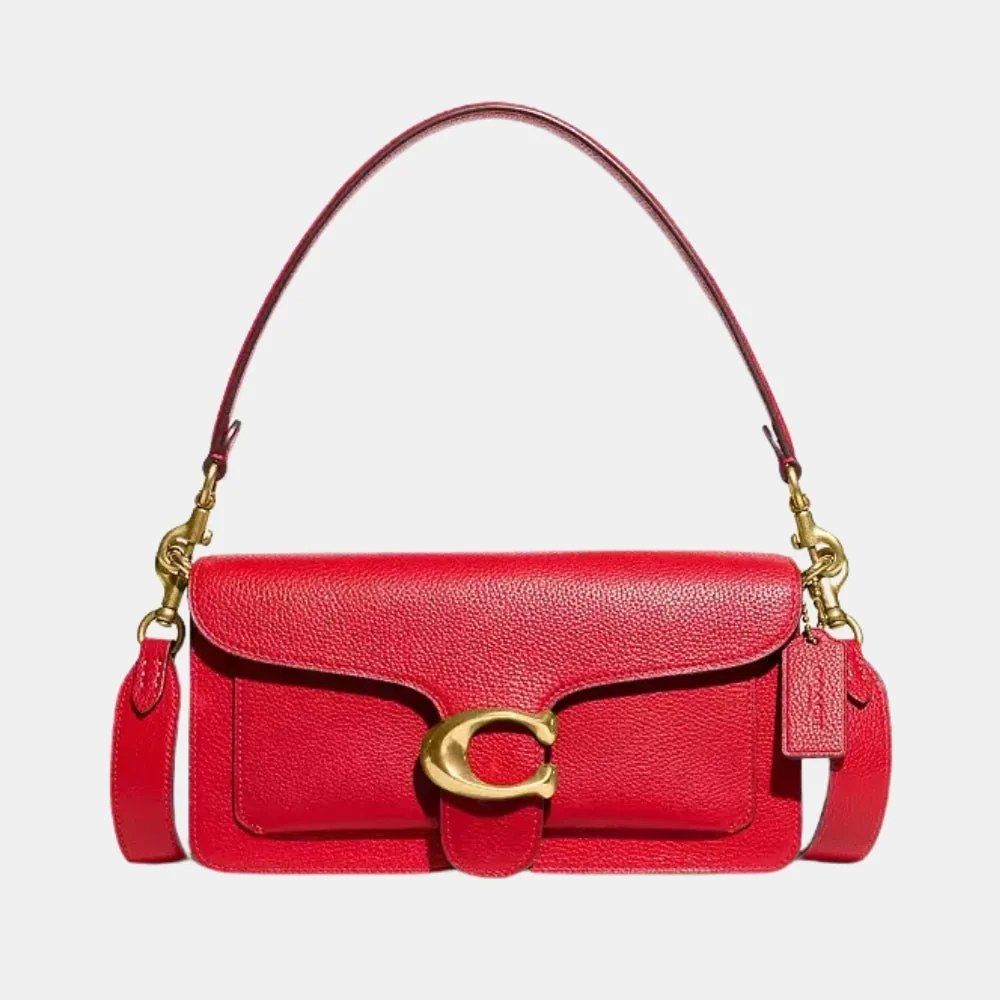
Coach's website uses style numbers in its product pages. For example, the Tabby Shoulder Bag 26 appears on coach.com under style numbers such as CH857, followed by a code for the colour and hardware. The Tabby 26 in Maple that we sell is listed by Coach as CH857 in that colour.
To check a style number:
- Find the style number on the tag inside the bag, or on the bag's paper swing tag if it still has one.
- Search for "Coach" and the number on Google, or on coach.com or Coach Outlet.
- Compare the results with your bag. You should see the same model, in the same shape, with the same hardware and details. Colour can differ, because the same style comes in many colours.
- Be suspicious if the number brings up a different bag, or nothing at all, or only listings from unofficial sellers.
As with the old creed codes, a matching style number is necessary but not sufficient. A counterfeiter copying a popular bag will copy its style number too.
What is a "10-digit serial number"?
People search for this because many products, from electronics to appliances, have serial numbers that are about ten characters long, and they wonder whether the number on their bag should be the same.
In general, a 10-digit serial number is simply a serial number ten characters long. On electronics it usually identifies one individual unit, and the manufacturer can look it up: monitors, storage devices and many other products use serials of around 10 or 12 characters, printed on a label on the product and on its box.
On a Coach bag, length tells you nothing on its own. A newer creed code such as the illustrative "H1269-F19260" happens to be about ten to twelve characters long, depending on whether the bag has an F and whether you count the dash. Older codes are shorter. What matters is whether the format fits the bag's era and whether the style number fits the model, not how many characters it has.
And remember the key difference: an electronics serial number can be checked against the manufacturer's records. A Coach number can't.
How to check your Coach serial number, step by step
If you want to do the number check properly, here's the order to do it in:
- Find the number. Look for the leather creed patch inside the main compartment, then for a small white tag in the inside pockets and seams.
- Write it down exactly, including any F, and photograph it in good light.
- Check the lettering. On a creed, the characters should be pressed cleanly into the leather, evenly spaced and straight. On a fabric tag, the printing should be sharp, not smudged or blurred.
- Work out the era. Is it a plain number, a short code with a month letter, or a newer code with a two-digit year? Does that era fit the bag's design?
- Check the date. If the code includes a year, was the bag's design actually on sale then?
- Check the style number. Search it with "Coach". Does it bring up this model?
- Then move on to the bag itself, because everything above can be copied.
Why a "correct" serial number proves nothing
It's worth saying plainly, because it's where most people get caught out.
Counterfeiters work from genuine bags. They copy the shape, the logo, the hardware, the creed wording and the number. Popular models attract the most copying, so the most common bags are the ones where a "correct" number means the least. Collectors regularly find the same number on many fakes of the same bag.
The number is also the easiest part of a bag to fake well: it's a few characters pressed into a patch or printed on a tag. Getting the leather, the stitching, the weight of the hardware and the exact proportions right is much harder and more expensive. That's why the checks below matter more.
The checks that matter more
1. Measure it
This is the simplest, most objective check, and few people do it. Coach publishes the dimensions of its bags on its product pages, usually as length, height and width in inches (or centimetres on some regional sites).
Copies are often made from photos rather than from Coach's patterns, so they can be noticeably off in size or proportion. Lay the bag flat, measure across the base for length, from base to top edge for height (not including the handle) and across the side for width, then compare with Coach's figures for that model.
A few examples from Coach's specifications and our guides:
| Bag | Coach's dimensions |
|---|---|
| Tabby Shoulder Bag 26 | 10.25 in long (about 26 cm); 5.5 to 6 in high and 2.75 to 3.25 in wide, depending on the version |
| Tabby Shoulder Bag 20 | About 19.7 × 10.8 × 7 cm |
| Tabby Chain Crossbody 19 | About 19.5 × 10.5 × 4.5 cm |
| Mini Klare Crossbody | About 17.8 × 13.3 × 5.1 cm |
| Klare Crossbody | About 21.6 × 15.9 × 8.9 cm |
| Mini Rowan Crossbody | About 17.8 × 12 × 10 cm |
Allow a little for soft leathers and for how you measure, around half a centimetre either way. But if a "Tabby 26" is two or three centimetres too short or too tall, or its proportions look wrong next to Coach's photos, that's a serious warning.
Notice that the same style can have different official sizes in different materials. Coach lists some Tabby 26 versions at 5.5 inches high and others at 6, so check the listing for the exact version and material you have.
Tabby Shoulder Bag 26 (Maple)PKR 63,050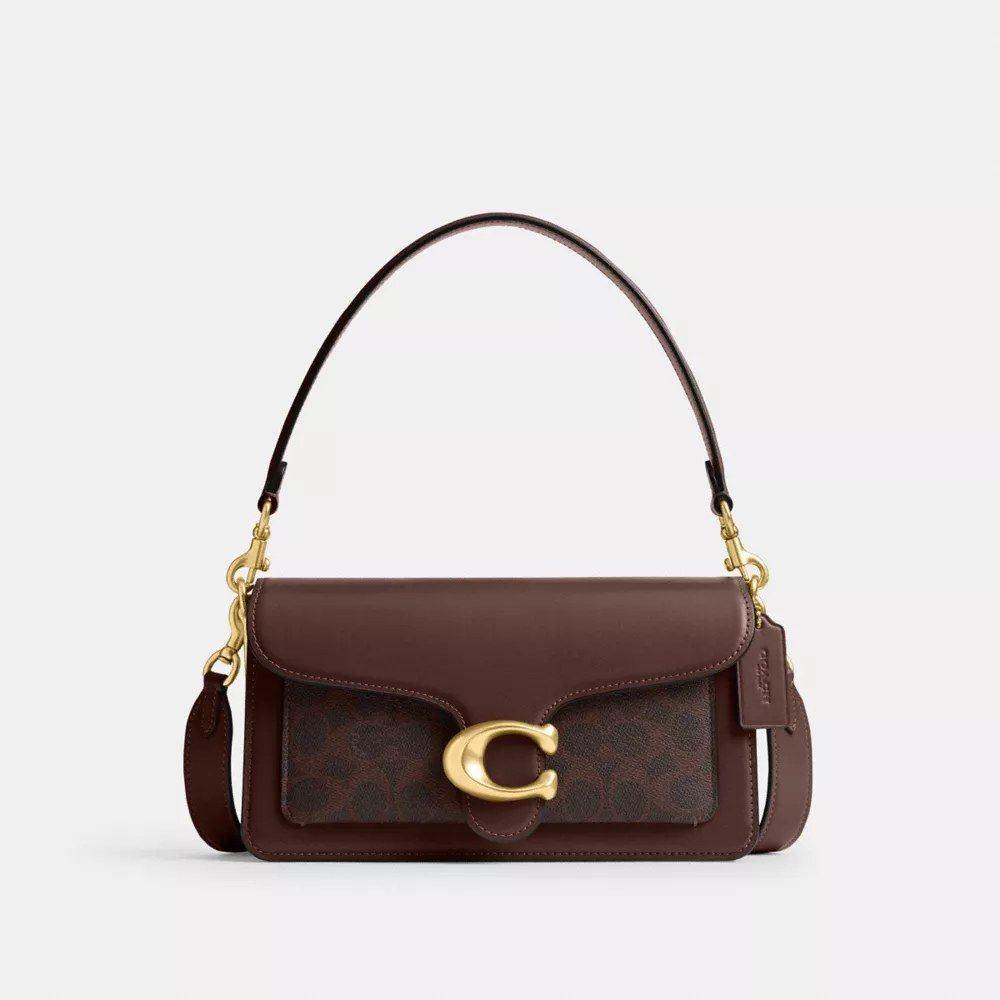 Tabby Shoulder Bag 26 In Signature Canvas (Maple)PKR 63,050
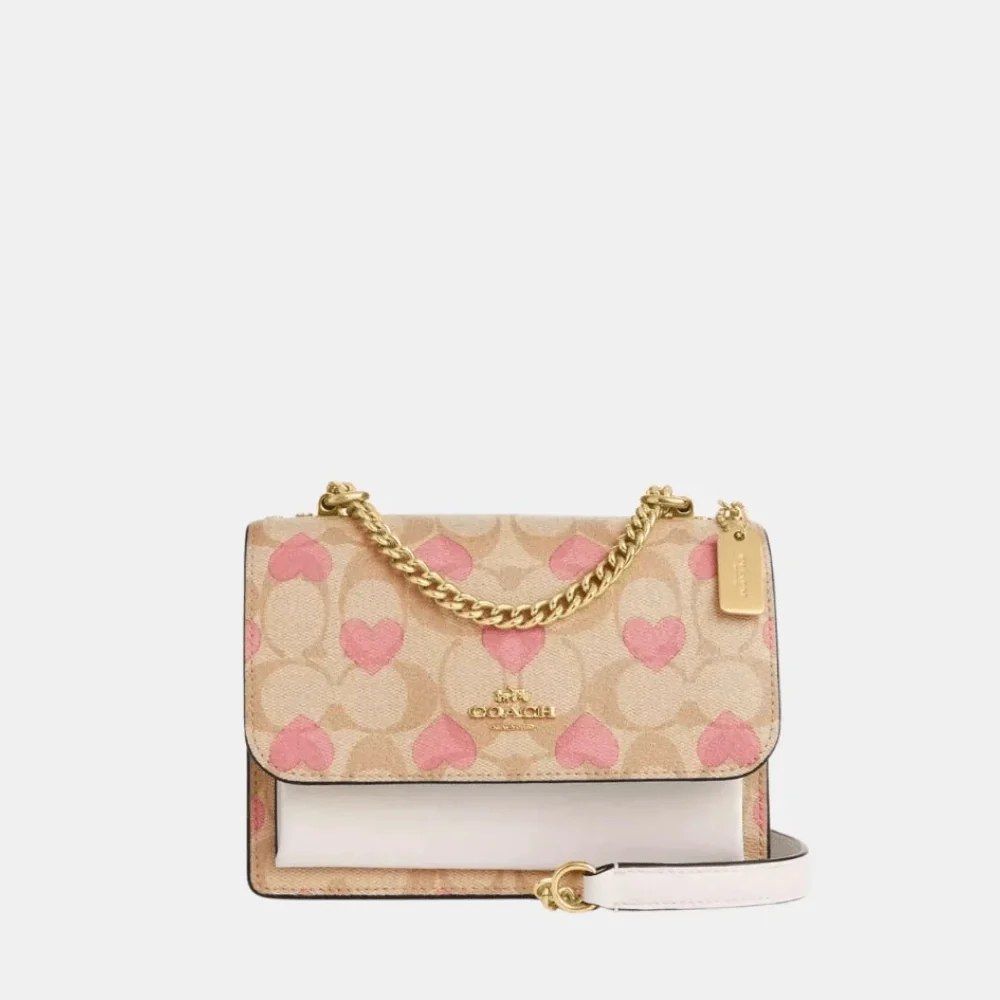 Mini Klare Crossbody In Signature Canvas With Heart PrintPKR 36,860
2. Look at the stitching
Stitching is one of the hardest things to fake well, because it needs good machines, good thread and patient workers.
On a well-made bag you'd expect:
- Even stitches, all the same length, running in straight lines and smooth curves.
- Consistent spacing from the edge all the way round.
- Neat ends, where a line of stitching finishes cleanly rather than with loose loops or a knot of thread.
- No loose threads, gaps or doubled-back stitches in visible places.
Look especially at the handles, where the strap meets the body, around the flap and along the base. Crooked lines, stitches that wander towards or away from the edge, and uneven stitch lengths are among the most reliable signs of a copy.
3. Check the edges
Where leather is cut, it's finished with edge paint or by folding and stitching. On a good bag, painted edges are smooth, even and neatly applied, without lumps, drips or gaps, and without cracking on a new bag. Rough, fuzzy or blobby edges, or edge paint that spills onto the face of the leather, suggest poor workmanship.
4. Feel the hardware
Pick the bag up and handle every metal part.
- Weight: genuine hardware is solid metal and feels it. Very light, hollow-feeling clasps, rings and feet are a warning.
- Finish: the plating should be even, without bubbles, flaking or patches of a different colour.
- Engraving: where hardware carries the Coach name or the C logo, the lettering should be crisp, centred and clean, not shallow, blurry or crooked.
- Function: turnlocks should turn firmly, snaps should close with a clean click, and zips should run smoothly without catching.
On a Tabby, look closely at the Signature C hardware on the flap: its shape, the evenness of its finish and how neatly it's attached.
5. Look at the materials
- Leather: genuine leather has a natural grain with small variations. Pebbled leather has an irregular, organic pebble; smooth leather is supple, not plasticky. A strong chemical or plastic smell, or a surface that looks printed rather than grown, is a bad sign.
- Signature canvas: Coach's Signature canvas is a coated cotton canvas, usually trimmed with leather. The C pattern should be crisp, even and consistent in colour. On well-made bags the pattern is placed carefully across the main panels; badly cut, smudged or uneven patterning is a warning.
- Lining: the inside should be as neat as the outside, with straight seams, well-attached pockets and no glue marks.
6. Check the labels and tags
Look at every label, not just the number:
- The creed or story patch: pressed lettering, straight lines, correct spelling, neat stitching round the edge.
- Leather hang tags: neat edges, clean stamping, a solid attachment.
- Fabric tags: sharp printing and correctly spelt care and material information.
Spelling mistakes, crooked text, a logo with the wrong proportions, or a tag that looks glued on rather than stitched are all reasons to doubt the bag.
7. Think about the price and the seller
Finally, step back from the bag and look at the deal. Coach Outlet regularly sells bags at a discount, and our outlet guide explains how far below boutique prices that goes. But a new Coach bag offered in Pakistan for a fraction of what it would cost even at a US outlet, plus shipping, simply doesn't add up.
Be especially careful with sellers who:
- use code words such as "master copy", "first copy", "AAA", "mirror quality" or "original quality", which all mean a copy;
- won't say where the bag was bought, or say only that it's "from the outlet" without any detail;
- won't send clear close-up photos of the stitching, hardware, labels and number;
- refuse to let you check the bag on delivery.
What doesn't prove anything
Some things people treat as proof aren't.
- A box, dust bag or paper bag. These are easy to make or reuse, and copies often come with very convincing packaging.
- A "certificate of authenticity" from a seller. Coach doesn't authenticate bags for the public, so a certificate printed by a seller is only that seller's claim.
- A receipt you can't verify. A screenshot or photocopy of a receipt is easy to fake. A receipt only helps if you can tie it to the bag and the seller.
- A matching serial number. As above, it rules bags out, but it can't rule them in.
None of these is worthless as part of a wider picture. But none is a substitute for checking the bag itself.
Myths you'll hear
A few beliefs come up again and again in conversations about Coach bags. They sound reasonable, and they mislead people in both directions.
"Real Coach bags always have a serial number." Many do, but not all, and many newer bags carry a style number on a fabric tag rather than a creed. A missing creed doesn't make a bag fake, and a creed doesn't make it real.
"A real Coach bag always comes with a box and a dust bag." Coach packaging varies by channel and by piece, and many genuine bags change hands without either. Packaging is also one of the easiest things to fake, so it can't tell you much either way.
"Outlet bags are fakes." They aren't. Outlet designs are made for Coach's outlet stores and are genuine Coach. They're simpler, and they're priced lower, but they're not copies.
"Made in China means fake." Coach, like most fashion brands at its level, makes its bags in several countries, including China, Vietnam, the Philippines and Cambodia. The country on the tag tells you nothing about authenticity by itself.
"If it smells of leather, it's real." Smell helps you rule out plastic, but leather copies exist. It's one clue among many.
Different kinds of genuine Coach
It helps to know that genuine Coach comes in a few forms, so that a real bag doesn't look "wrong" to you for the wrong reason.
- Boutique (full-price) designs, such as the Tabby, sold in Coach stores and on coach.com.
- Outlet designs, made for Coach Outlet, often in Signature canvas or crossgrain leather, with simpler details. Older outlet bags often carried an F in the style number. They're genuine Coach, just a different line.
- Vintage Coach, mostly from the 1970s to the 1990s, often in glovetanned leather, with creed patches and brass hardware. Vintage bags follow older conventions, so judge them against bags of the same era.
- Coach (Re)Loved, Coach's own programme for restored, reworked and resold Coach bags.
An outlet bag that looks simpler than a boutique Tabby isn't fake; it's an outlet design. Our Coach history covers the eras and lines in more detail.
Model notes: the Coach bags people ask about most
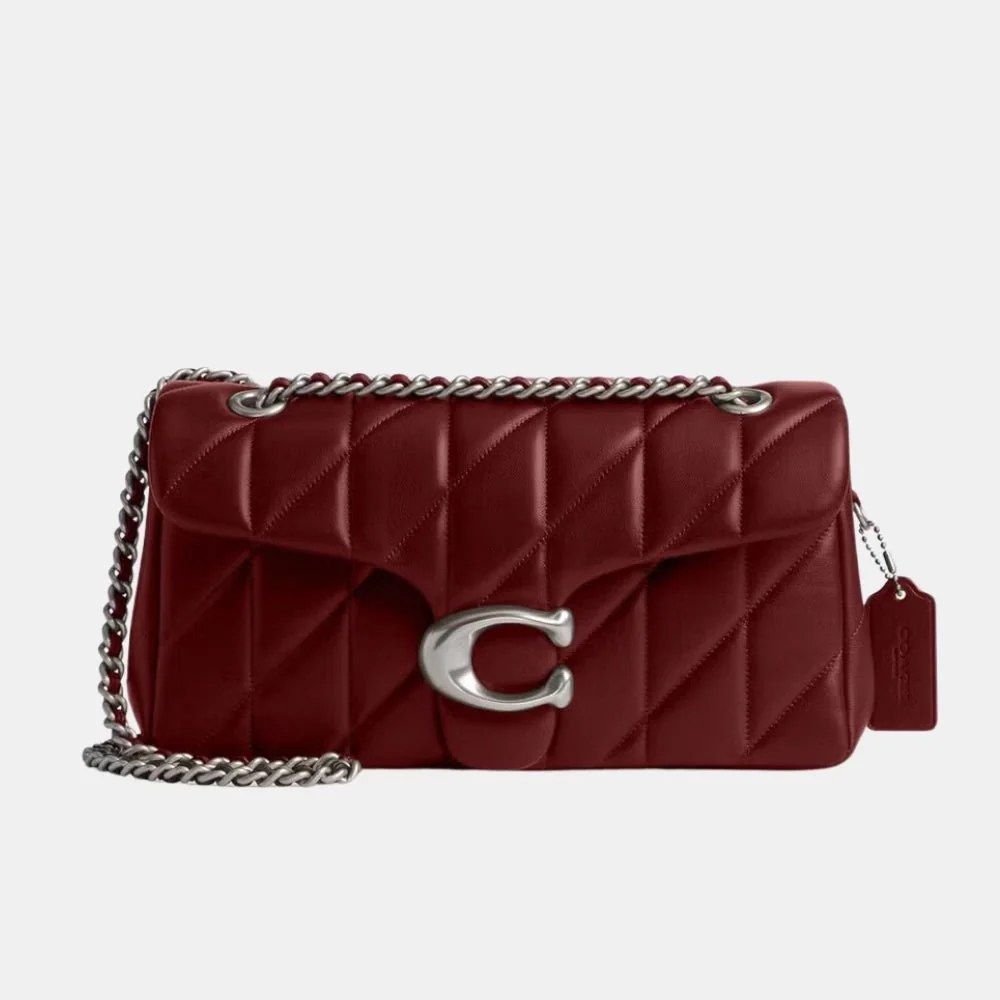
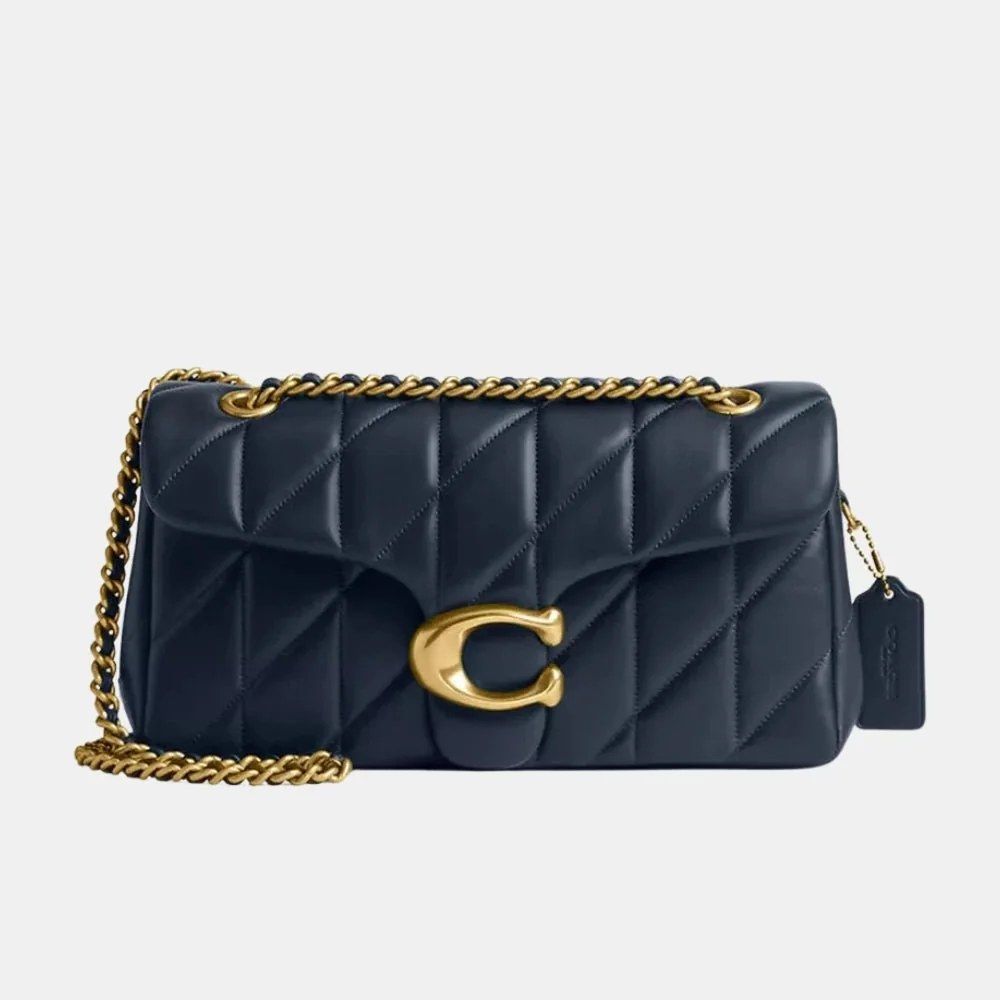
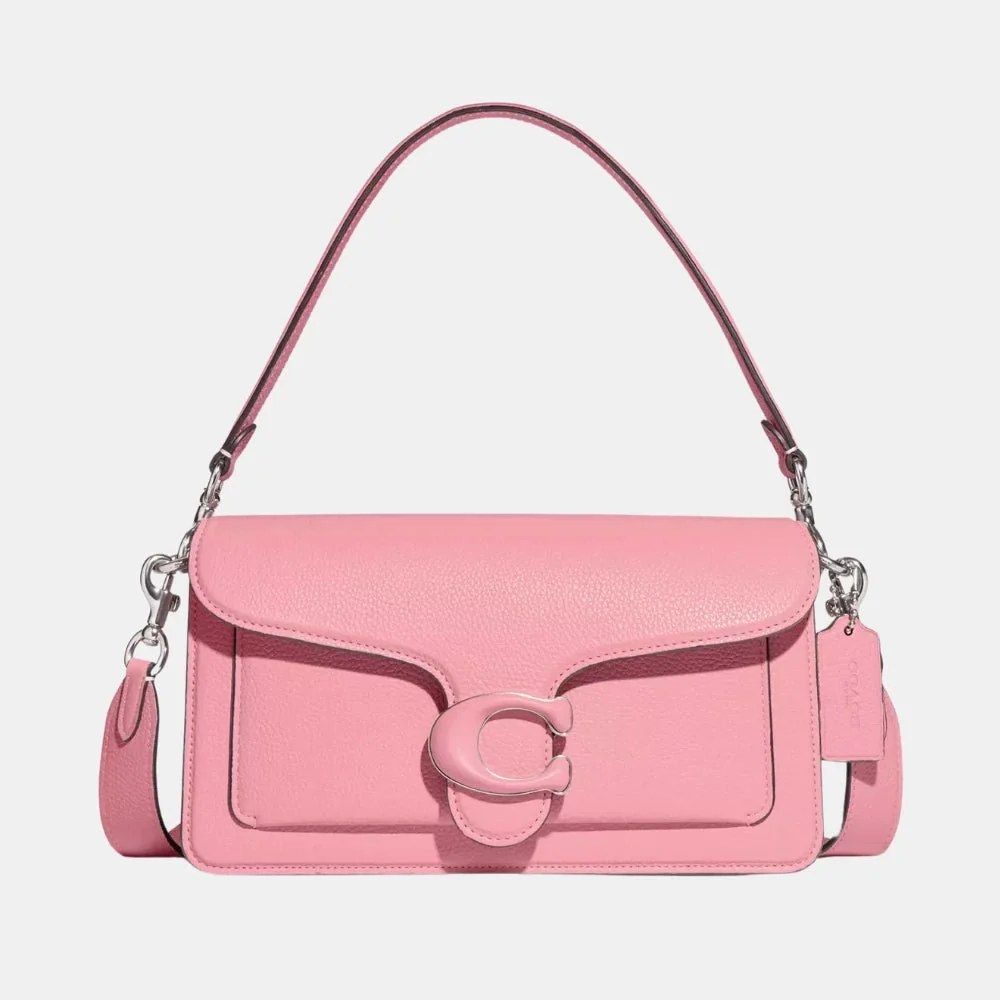
Tabby. Check the Signature C on the flap first: its shape, finish and attachment. Then the measurements, which vary slightly between leather, canvas and quilted versions, and the date code if there is one. The Tabby was introduced in 2019, so a code dated before then doesn't fit. Our Tabby 20 vs 26 guide covers the sizes and versions.
Signature canvas bags. Look at how the C pattern is printed and placed, at the leather trim and its edges, and at the stitching where canvas meets leather.
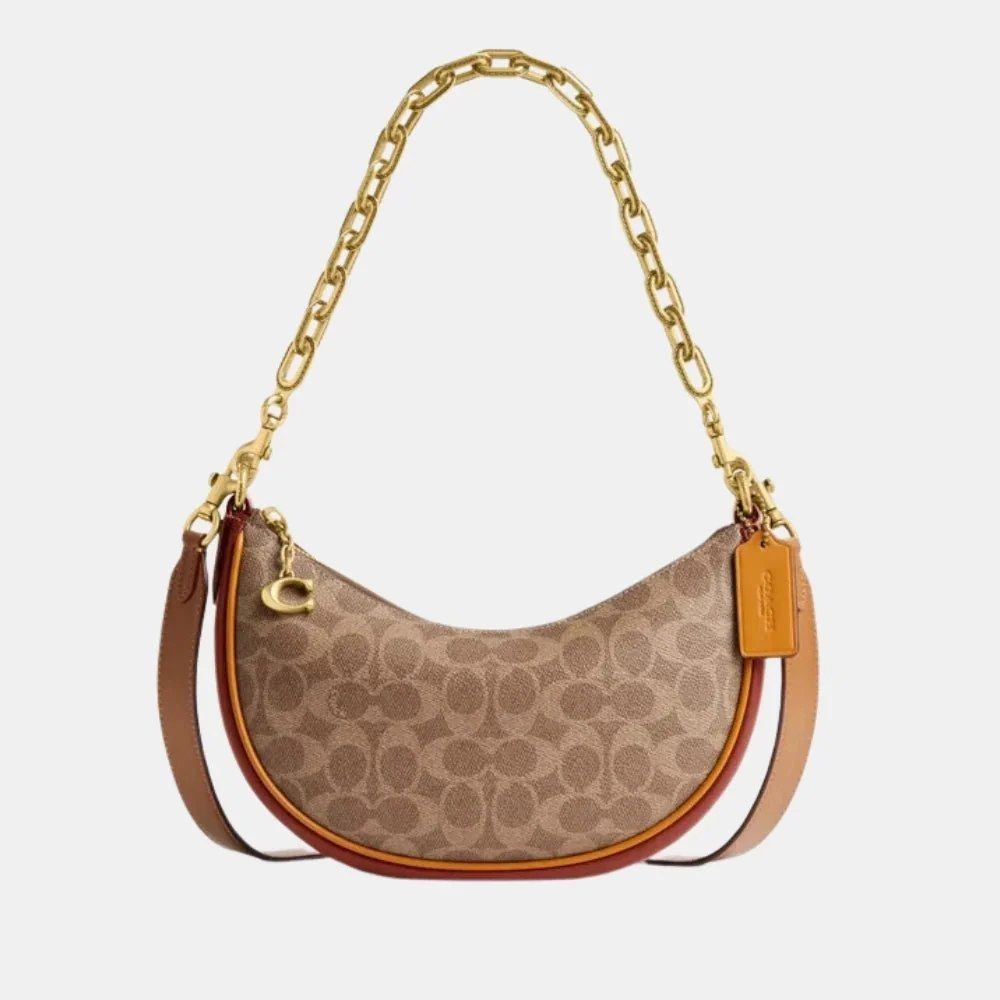
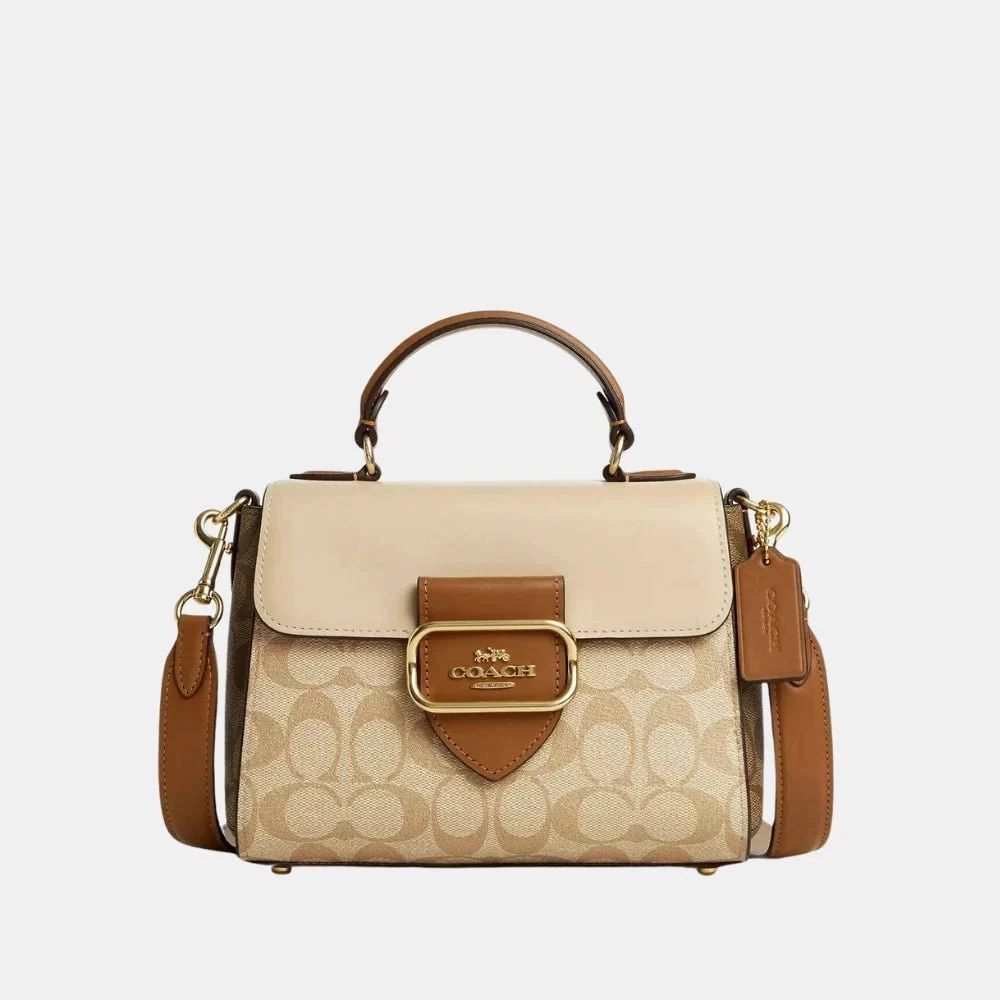
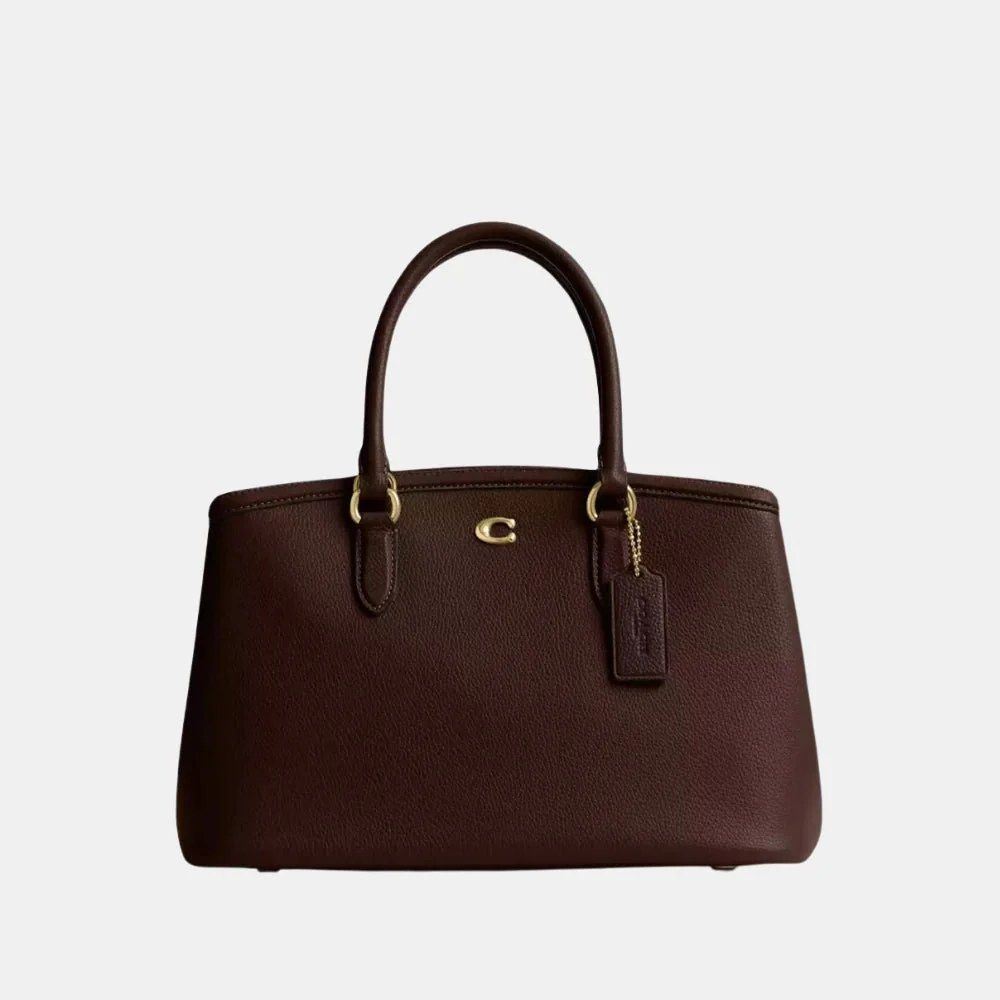
Outlet designs such as the Teri, the Klare and the Rowan. Use the style number search to confirm the model exists, then check size and workmanship as usual. Outlet bags are simpler than boutique bags, but they should still be well made.
Wallets and card cases. Check the stitching along the card slots, the edges and the zip. Our Coach wallets guide shows the main styles.
What you get from us, honestly
Because this question matters so much, here is exactly what we do and don't do.
What we do:
- We buy every piece from an official retailer. Pieces marked "Sourced to order" are bought for you from an official retailer after you order.
- We check each piece by hand before it ships: stitching, hardware, tags and condition.
- We record each piece on video before dispatch, so there's a record of exactly what left us.
- We deliver free anywhere in Pakistan.
What we don't do:
- We don't include a box, a certificate, a serial-number card or any paperwork that "proves" a bag is genuine. As this guide explains, Coach doesn't issue such proof to the public, and paperwork is easy to fake anyway.
What we ask you to do: check your bag on delivery, using the steps in this guide. Our return policy gives you 12 hours from delivery to tell us about any problem, with photos. That's enough time to measure the bag, look at the stitching and hardware and find the number, and it's the moment to do it.
A ten-minute check on delivery
Keep this list for when your parcel arrives:
| Step | What to look for |
|---|---|
| 1. Film the unboxing | A continuous video from sealed parcel to bag in hand protects you if anything is wrong |
| 2. Measure | Length, height and width against Coach's listing for that exact version |
| 3. Stitching | Even, straight, consistent, with no loose threads, especially at handles and corners |
| 4. Edges | Smooth, even edge paint, no lumps or spills |
| 5. Hardware | Heavy, evenly finished, crisply engraved, working smoothly |
| 6. Materials | Natural leather grain or crisp, even Signature canvas; no chemical smell |
| 7. Labels | Creed or tag present where expected, cleanly pressed or printed, correctly spelt |
| 8. Number | Format fits the era; style number brings up the same model |
| 9. Lining | Neat seams and pockets, no glue marks |
| 10. Report | Anything wrong: photos to us within 12 hours |
Buying secondhand or from someone else
If you're buying a Coach bag from an individual, a reseller or an Instagram shop, the same checks apply, but you'll often have to do them from photos first. Ask for:
- Close-ups in daylight of the stitching at the handles and corners, the edges, every piece of hardware and its engraving.
- The creed or tag, with the number clearly readable.
- The bag next to a tape measure, showing length and height.
- The inside, including the lining and pockets.
- Where it was bought, and when, as specifically as possible.
A genuine seller can usually provide all of this easily. Reluctance, blurry photos or pressure to pay quickly are your answer.
There are also paid authentication services that review photos of a bag, or examine it in person, and give an opinion. They can be useful for an expensive vintage piece, but they're opinions, not Coach's verdict, so choose a well-established one and still do your own checks.
Our guide to luxury brands in Pakistan covers the safest ways to buy designer bags here, how to pay safely, and what your options are if something goes wrong.
Frequently asked questions
How do I check if my Coach bag is legit?
Find the number on the creed patch or the small white tag inside, check that its format fits the bag's era and that the style number brings up the same model, then check the bag itself: measure it against Coach's published dimensions and look closely at the stitching, edges, hardware, materials and labels. The physical checks matter more than the number.
How do I check a bag's serial number?
Find it inside the bag, write it down exactly, and check its format and style number as described above. For Coach, there's no official database to look it up in, so checking means confirming that it makes sense for the bag, not getting an official answer.
Can I look up a Coach serial number?
Not officially. Coach doesn't run a public serial-number lookup and says it does not respond to requests to authenticate products. Online "checkers" can decode the format of older creed codes, but they don't have access to Coach's records.
Can I look up a serial number?
For many electronics, appliances and watches, yes: the manufacturer can often check a serial number for warranty or registration. For fashion brands such as Coach, generally no: the number identifies the style and production details, not the individual bag, and there's no public database.
How do I check my serial number?
On a Coach bag, look for a leather patch inside the main compartment with a number starting "No.", or a small white fabric tag in an inside pocket or seam. Then check that the format fits the era, that any date isn't before the design existed, and that the style number brings up the same model.
What is a 10-digit serial number?
Generally, a serial number that's ten characters long, as used on many electronics, where it identifies one individual unit. On a Coach bag, the number of characters doesn't matter: newer creed codes are often around ten to twelve characters, older ones shorter. What matters is whether the format and style number fit the bag.
Does Coach authenticate bags?
No. Coach's brand protection page says it does not respond to requests to authenticate products. It does list its authorised sales channels and lets you report counterfeits.
What does the F in a Coach serial number mean?
Collectors associate an F before the style number with bags made for Coach's factory (outlet) stores. It means an outlet design, which is still genuine Coach, not a fake.
Do all Coach bags have serial numbers?
No. Many older bags have a creed patch with a number, and many newer bags have a style number on a small white fabric tag. But some items, especially very small ones, have no number, and on some bags the tag is hard to find.
Can a fake Coach bag have a real serial number?
Yes, often. Counterfeiters copy numbers from genuine bags, and the same number can appear on many copies. That's why the size, stitching, hardware and materials matter more than the number.
Does a genuine Coach bag come with a certificate of authenticity?
Coach doesn't authenticate bags for the public, so a "certificate" from a seller is only that seller's claim. Judge the bag, not the paperwork.
Do you send a box or certificate with your bags?
No. We don't include a box, certificate or paperwork to prove authenticity. We buy from official retailers, check every piece by hand and record it on video before it ships, and we ask you to check it on delivery using this guide. You have 12 hours from delivery to tell us about any problem.
How do I measure a Coach bag correctly?
Lay it flat and empty. Measure length across the base, height from the base to the top edge of the body (not the handle) and width across the side. Compare with the dimensions on Coach's product page for the same version, allowing about half a centimetre for soft materials.
What should I do if I think my Coach bag is fake?
If you bought it from us, send us photos within 12 hours of delivery and we'll look into it. If you bought it elsewhere, contact the seller first, and use your payment provider's dispute process if needed. You can also report suspected counterfeits to Coach through its brand protection page.
Sources
- Coach, Brand protection (Coach does not respond to requests to authenticate products; authorised sales channels; counterfeit reporting)
- Coach, product pages for the Tabby Shoulder Bag 26 and other styles (style numbers and official dimensions)
- Libas Collective, Coach serial number lookup, and LuxeDetect, Where is the serial number on a Coach bag? (collectors' creed-code eras and formats; no public Coach database)
- Valentina's Vault, The mystery revealed: the Coach creed patch (month letters and year digits in creed codes)
- LuxeDetect, Coach wallet authentication guide (white tags with production and style codes on newer pieces)
- ViewSonic, Where to find the serial number of a monitor (10- and 12-digit serial numbers on electronics)
- Our guides to outlet vs full price, Coach's history, the Tabby 20 vs 26 and crossbody bags (outlet lines, the creed, and bag dimensions)