Charles & Keith vs Coach: Is the Upgrade Worth It?
Charles & Keith is in Pakistan's malls; Coach isn't, and costs more. An honest comparison of materials, construction, design, durability, cost per wear and resale value, who each brand suits, and the middle ground in between.
In this article (24)
- The short answer
- Meet the brands
- Charles & Keith vs Coach at a glance
- Two different kinds of brand
- Materials: the biggest difference
- Construction: what you're paying for
- Design: trend vs icon
- Durability and cost per wear
- Resale value
- Buying in Pakistan: a practical difference
- Like for like: the Coach equivalent of the shape you love
- What a Coach bag looks like after years of use
- Why Coach costs more
- Who should choose which?
- For students and young professionals
- The middle ground
- Questions to ask yourself before you upgrade
- Styling notes for Pakistani occasions
- A note on copies
- Caring for each
- A note on ethics and the environment
- How to make your first Coach purchase
- Frequently asked questions
- Sources
For many women in Pakistan, the first "brand" handbag is a Charles & Keith. Its stores are in the big malls of Karachi and Lahore, its designs are fashionable, its prices are approachable, and its bags look far more expensive than they are. Then, sooner or later, the question comes: is it worth stepping up to Coach?
It's a good question, and it deserves an honest answer rather than a sales pitch. Charles & Keith and Coach are different kinds of brands, made for different purposes, and each is the right choice for different people. This guide compares them properly: their histories, materials, construction, design, durability, cost over time, resale value and how you buy each one in Pakistan. We sell Coach, not Charles & Keith, so we'll be careful to give Charles & Keith its due, and we'll also show the middle ground between the two.
The short answer
- Charles & Keith is a fashion brand: trend-led designs, mostly in synthetic materials, at accessible prices, sold through official stores in Pakistan. It's excellent for following trends, for occasion bags and for anyone who prefers animal-free materials.
- Coach is an accessible-luxury brand: real leather and hard-wearing coated canvas, classic designs and decades of heritage, at higher prices. It's the better choice for a bag you'll use every day for years.
- The upgrade is worth it if you want one bag to carry daily for a long time, care about leather and longevity, or want a bag that holds some value. It's not worth it if you like to change your bag with every trend, or your budget is better spent elsewhere.
- The middle ground includes vegan-leather brands such as JW PEI, and Coach's own lower-priced outlet lines.
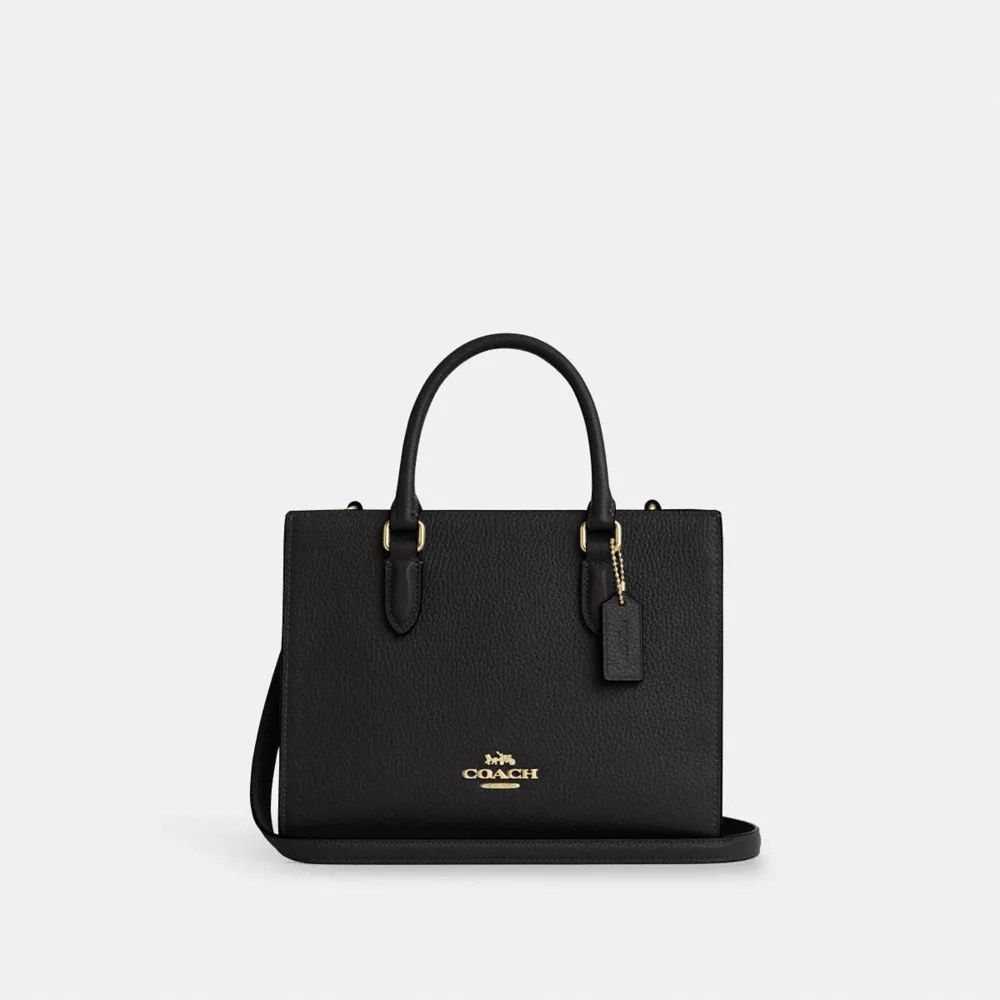
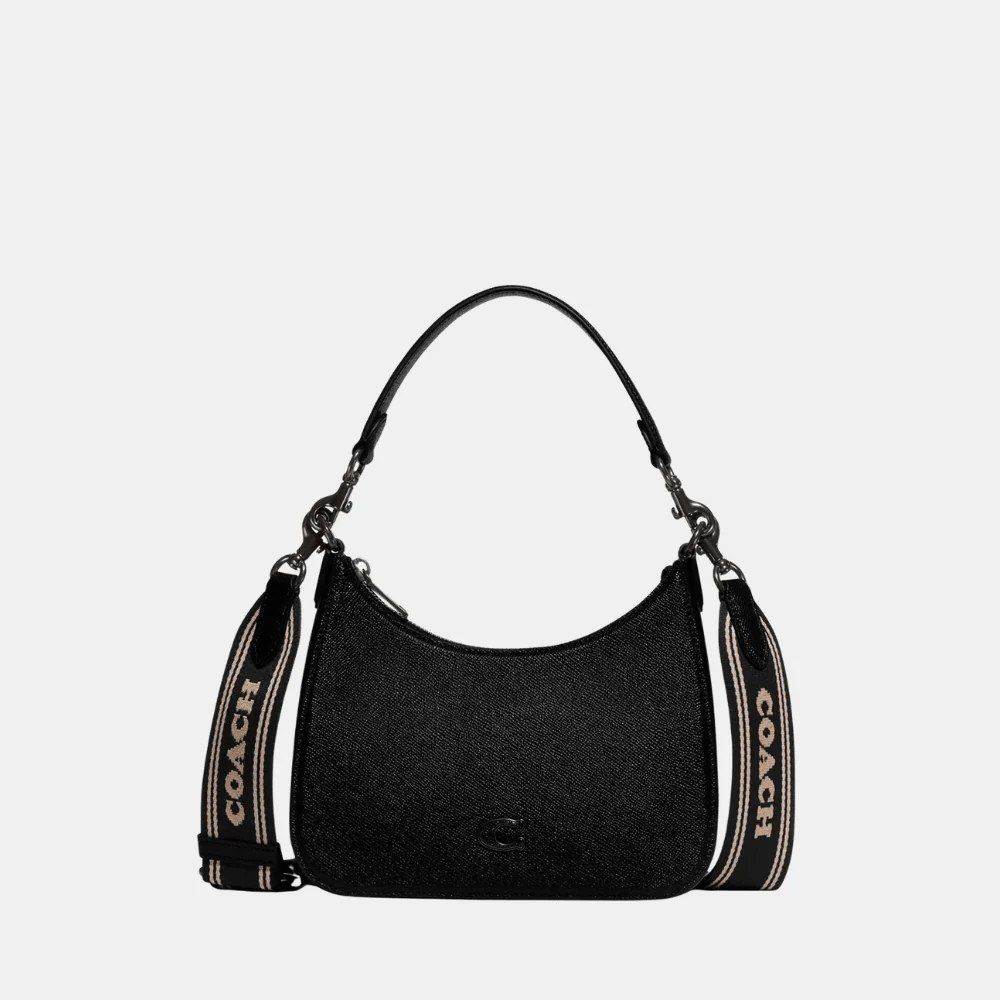
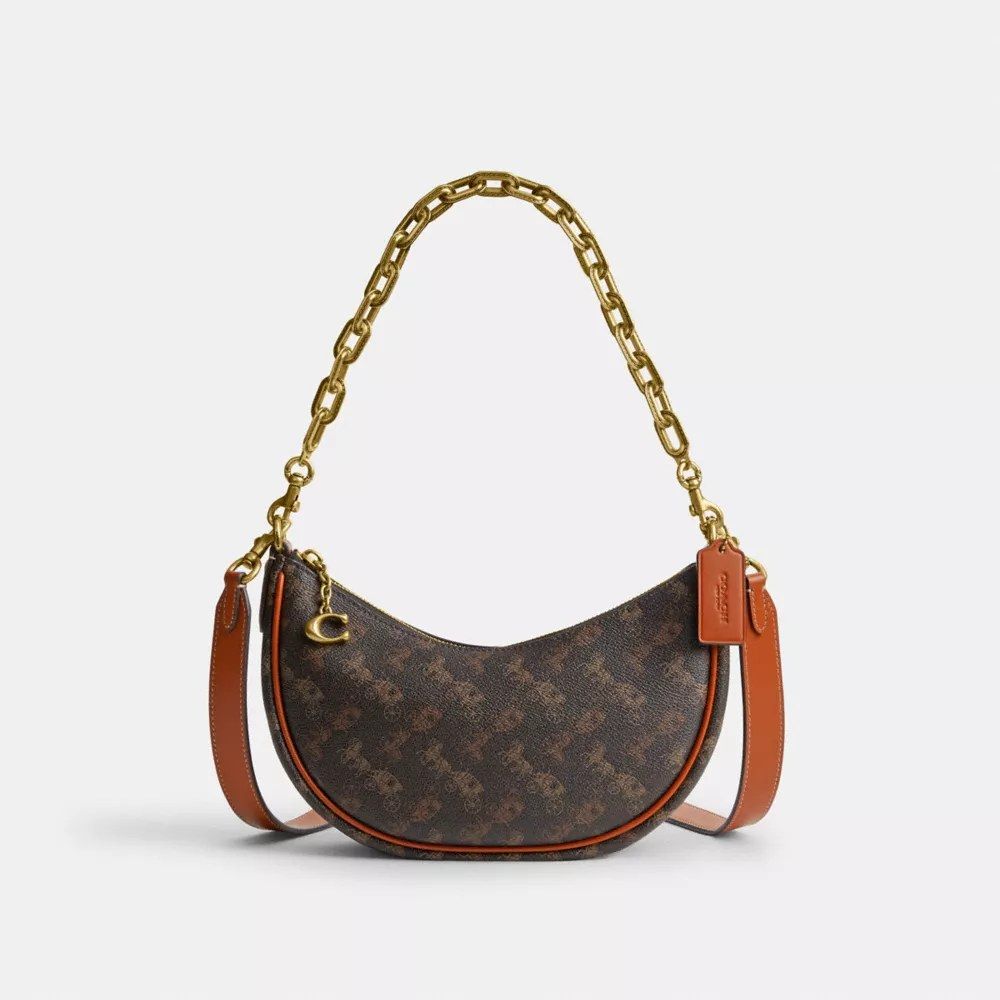
Maggie Small Tote Bag (Black)PKR 45,590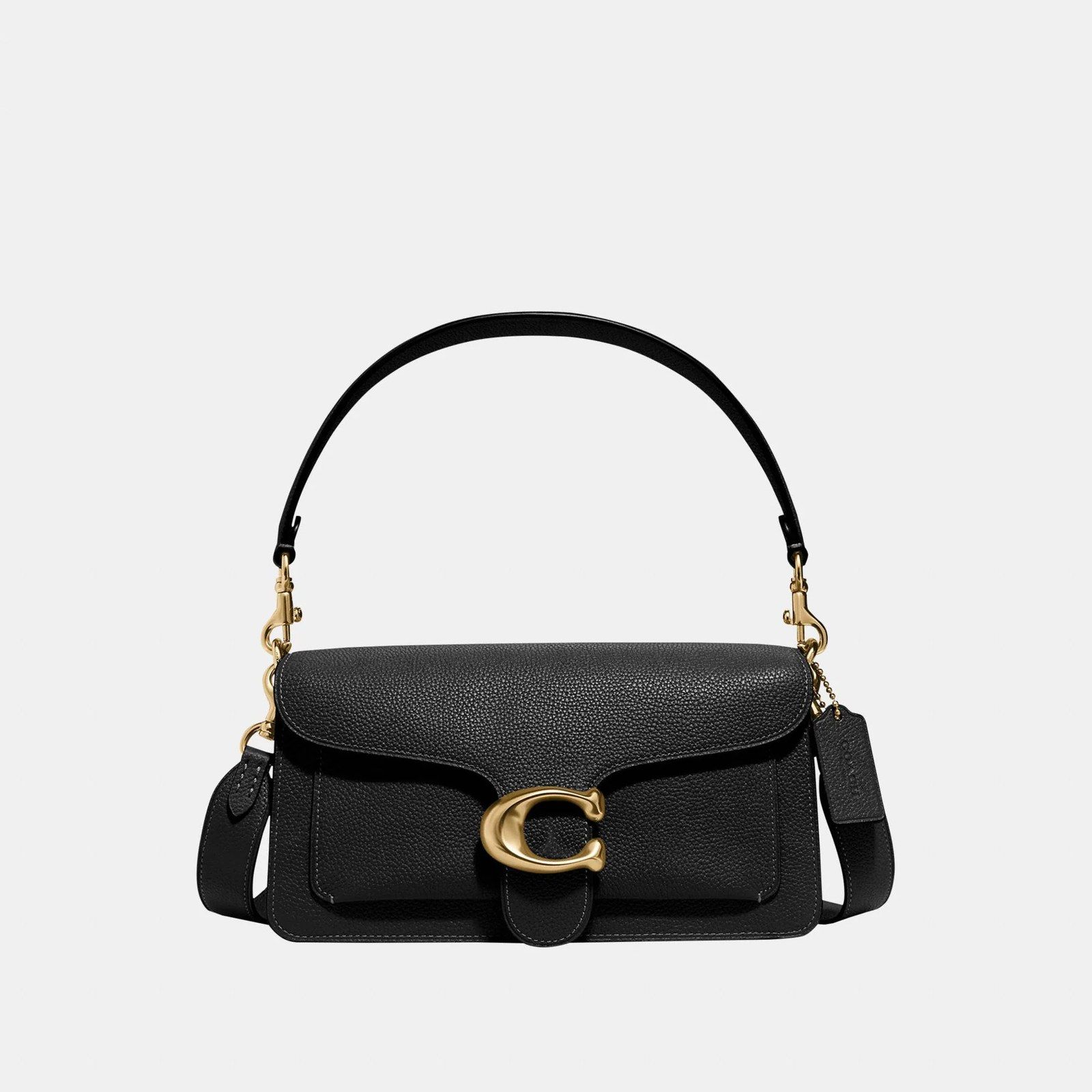 Tabby Shoulder Bag 26 (Black)PKR 53,350
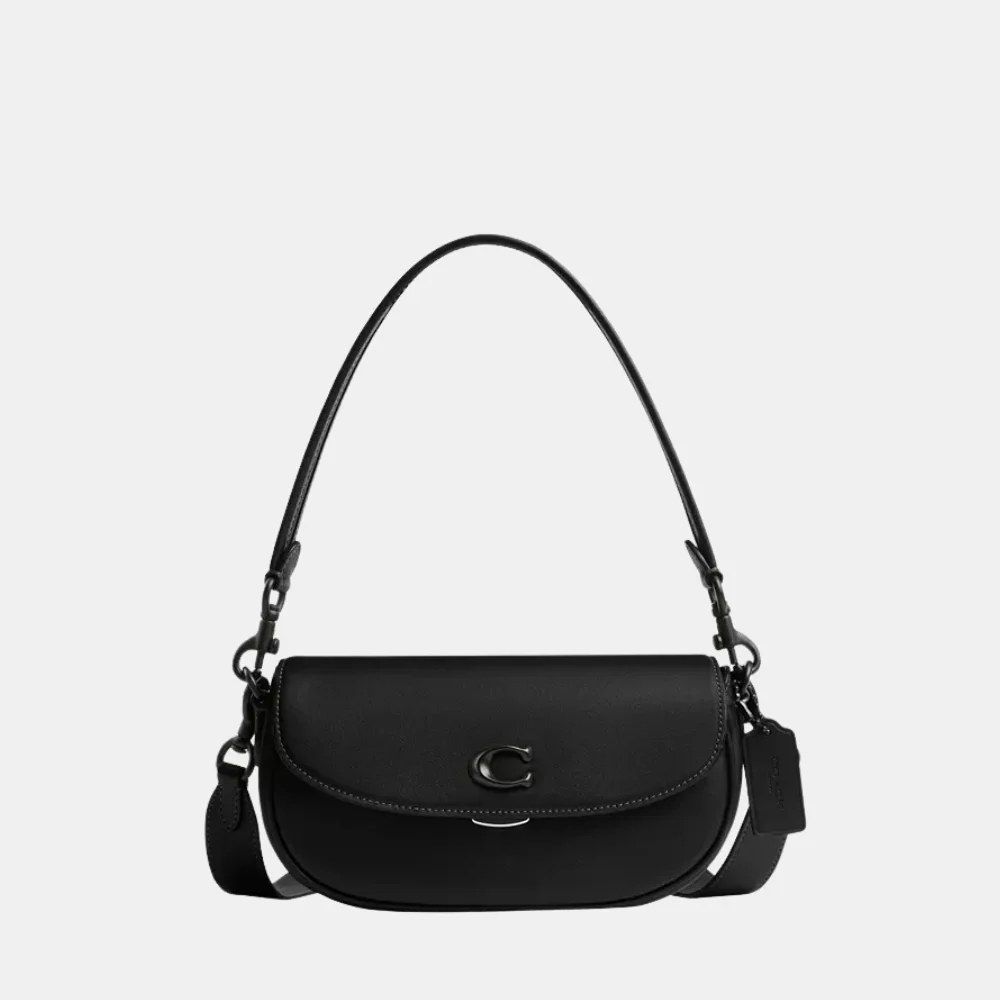
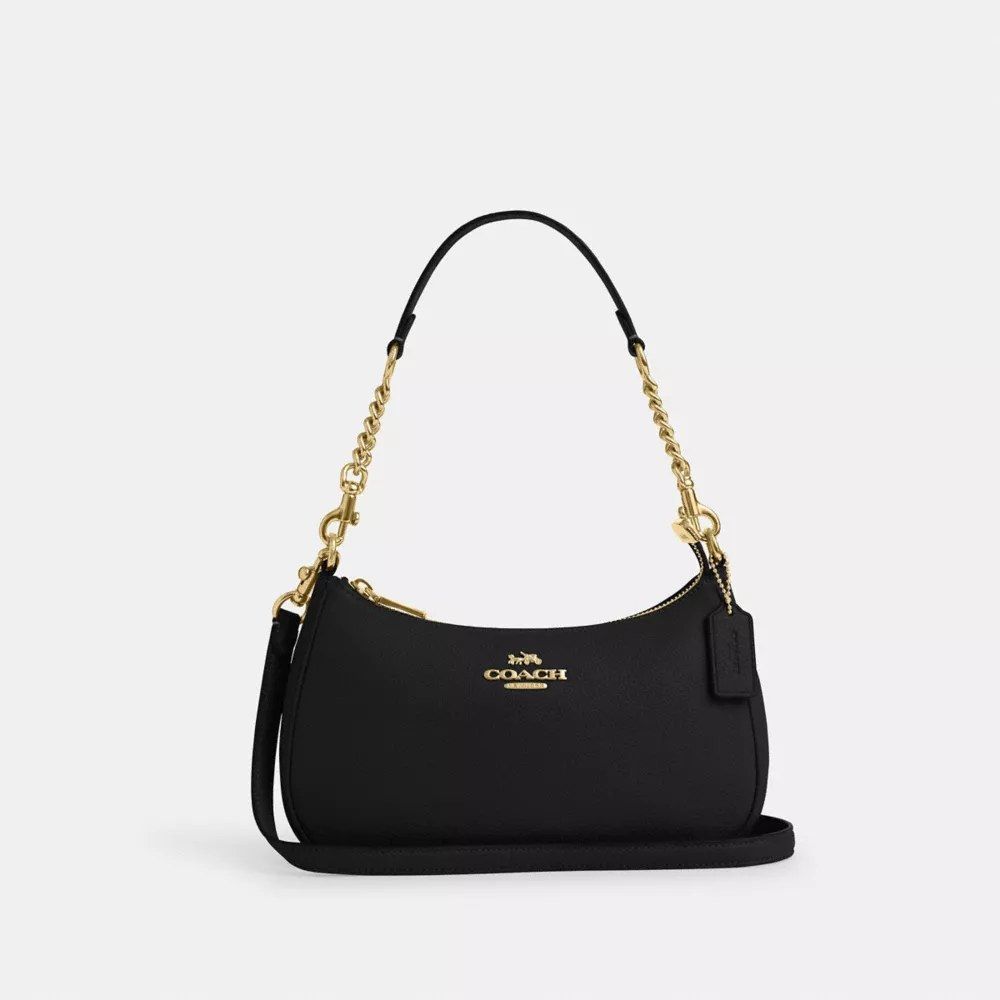 Teri Shoulder Bag (Black)PKR 50,440
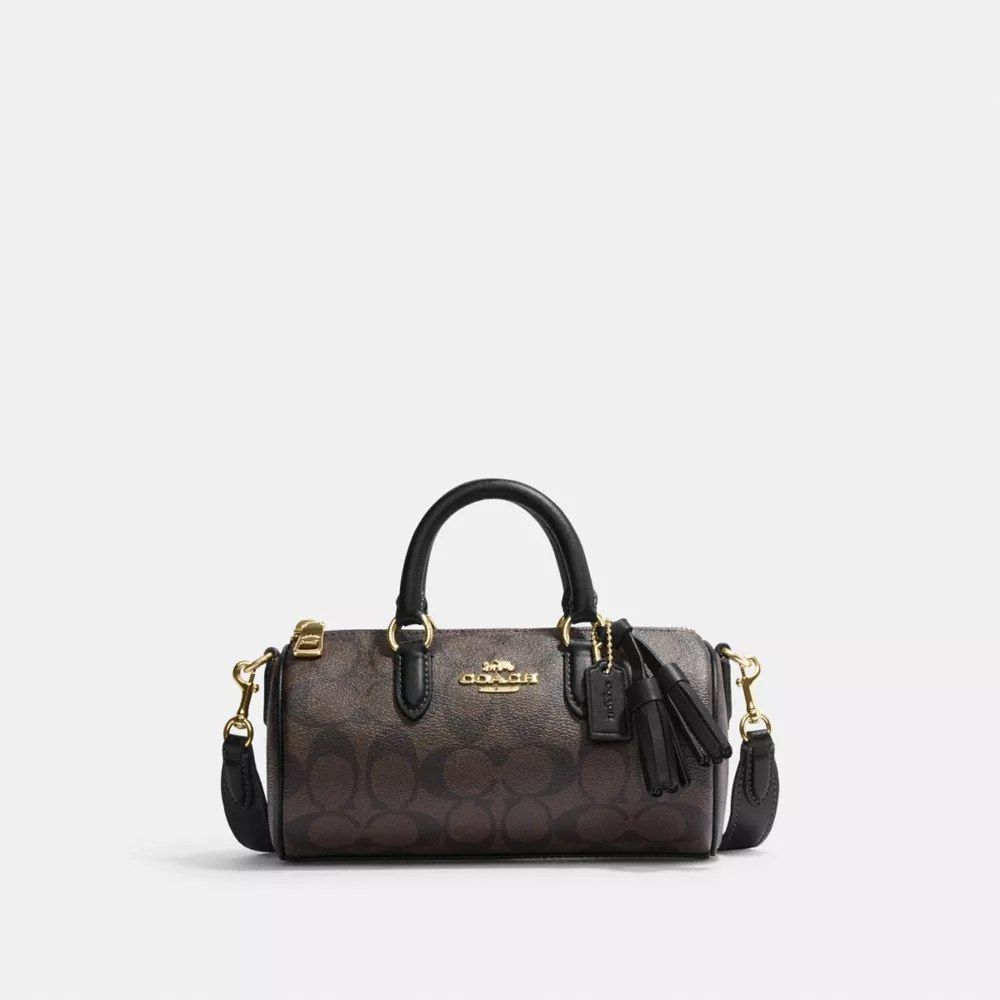
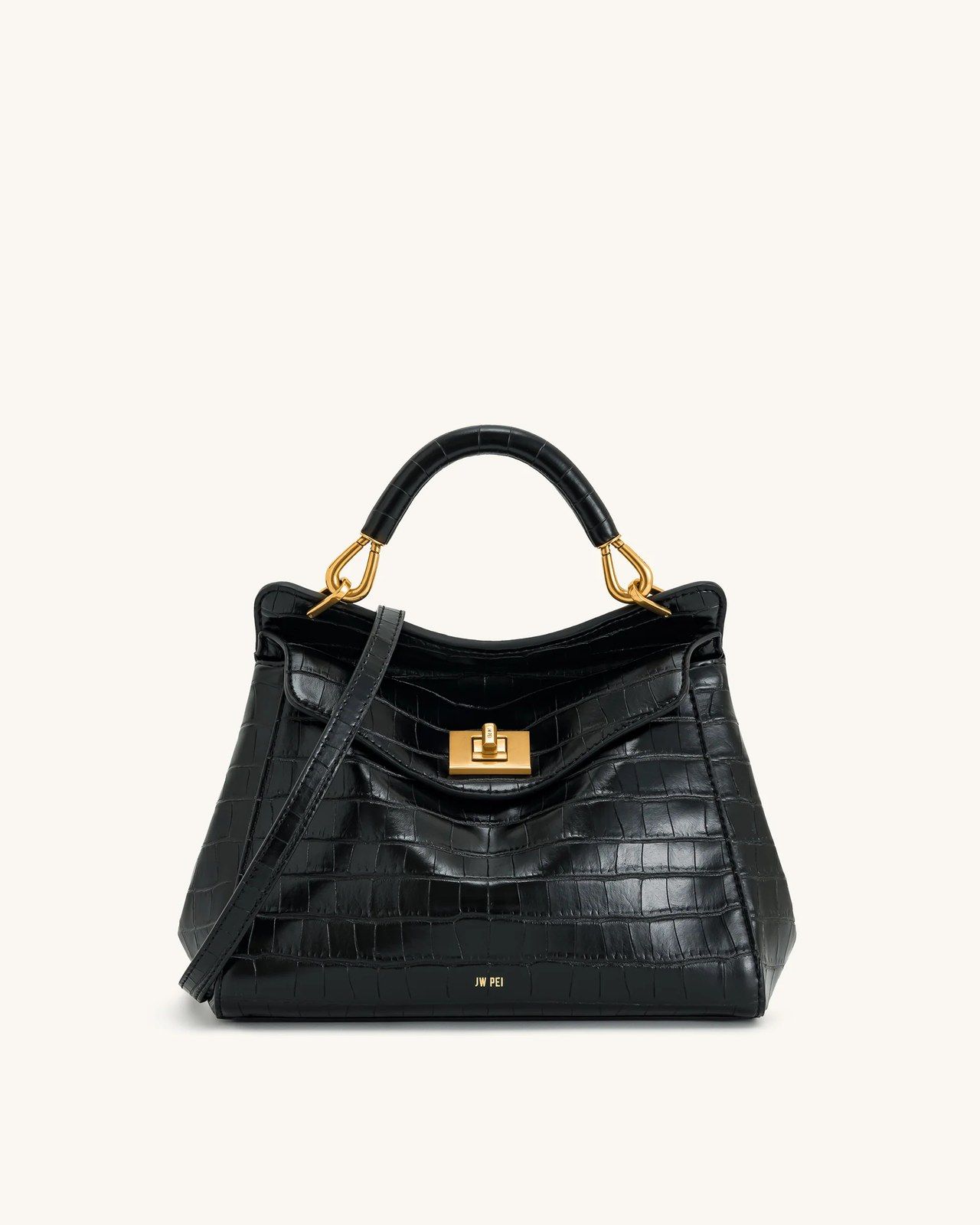 Lucia Classic Top Handbag - Black CrocPKR 38,315
Meet the brands
Charles & Keith
Charles & Keith was founded in 1996 in Singapore by two brothers, Charles and Keith Wong, who opened their first shop, selling women's shoes, in the Amara Shopping Centre. At first they sold shoes bought from the same wholesalers as everyone else. Their breakthrough came when they began offering their own original designs, which let them move quickly and stand out. Expansion across Singapore and Asia followed.
In 2011, L Capital Asia, a private equity firm linked to the French luxury group LVMH, took a 20% stake in the company, and helped it expand into China. Today the brand says it operates more than 600 stores in 37 countries, selling shoes, bags, eyewear, accessories and costume jewellery.
In Pakistan, Charles & Keith operates through a local franchise partner, Speed (Pvt.) Limited, with stores in malls such as Dolmen Mall and Lucky One Mall in Karachi, and Emporium Mall, Packages Mall and Dolmen Mall in Lahore.
The brand had a memorable moment in late 2022, when a young woman in the Philippines went viral on TikTok after people mocked her delight at receiving a Charles & Keith bag as a gift. The backlash against the mockery, and the brand's warm response, turned it into a global conversation about gratitude and what "luxury" really means.
Coach
Coach was founded in 1941 in a Manhattan loft by six leather-workers making wallets and billfolds. It became famous for its glovetanned leather, inspired by the way a baseball glove softens with use, and later for the designer Bonnie Cashin's practical, modern bags, the turnlock closure, the hangtag and, from the 2000s, its Signature canvas. Since 2013, under creative director Stuart Vevers, Coach has reinvented itself with modern icons such as the Tabby, launched in 2019 and based on a 1970s archive design. It's owned by Tapestry, which also owns Kate Spade. Our Coach history tells the full story.
Coach has no official stores in Pakistan, so Coach bags here are bought abroad or through resellers.
Charles & Keith vs Coach at a glance
| Charles & Keith | Coach | |
|---|---|---|
| Founded | 1996, Singapore | 1941, New York |
| Type of brand | Fashion | Accessible luxury |
| Main materials | Mostly polyurethane and other synthetics | Leather and leather-trimmed coated canvas |
| Design approach | Fast, trend-led, many new designs | Classics and icons, plus seasonal pieces |
| Ageing | Can peel and crack over time | Leather softens and develops character |
| Repairable | Rarely | Usually, by a leather specialist |
| Resale value | Very little | Some, especially for full-price icons |
| Official stores in Pakistan | Yes, through a local partner | No |
| Animal-free | Mostly | No (except some canvas details) |
| Best for | Trends, occasions, tight budgets | Everyday bags you keep for years |
Two different kinds of brand
The most important thing to understand is that these brands aren't trying to do the same thing.
Charles & Keith is a fashion brand. It's built on speed and trend: new designs arrive constantly, reflecting what's fashionable this season, at prices that let you buy often. Its bags are designed to look current and stylish, and most are made from synthetic materials that keep prices low.
Coach is an accessible-luxury brand. It sits in the tier below the great European luxury houses, alongside Michael Kors, Kate Spade and Tory Burch. In 2024, a US federal court described these brands as close competitors in a distinct "accessible luxury" handbag market, with entry prices of around US$100 in their own channels and a heavy reliance on discounting. Coach's full-price bags, like the Tabby, cost several hundred dollars, and its business is built on leather, heritage and designs meant to last more than a season.
How fashion brands and accessible luxury grew up
Both kinds of brand are products of the last few decades. From the 1990s onwards, "fast fashion" retailers learned to turn catwalk trends into affordable clothes and accessories within weeks, and shoppers learned to expect new designs constantly. Charles & Keith is one of Asia's great success stories of that model, applied to shoes and bags.
At the same time, American brands such as Coach and Michael Kors built a tier between fashion and the European luxury houses: real leather and designer names at prices more people could reach, sold in their own stores and in department stores around the world. That "accessible luxury" tier became one of the biggest parts of the handbag market, and in 2024 a US court treated it as a market of its own.
So the choice between Charles & Keith and Coach is really a choice between two models of shopping: buying often, for the moment, or buying less often, for the long term.
Neither model is better in the abstract. They're different tools for different jobs.
Materials: the biggest difference
Charles & Keith: mostly synthetic
Most Charles & Keith bags are made from synthetic materials, typically polyurethane (PU), often described as faux leather, with polyester linings. A smaller number of its products use leather.
Polyurethane has real advantages:
- It's affordable, which keeps prices low.
- It's light.
- It takes colour, shine, embossing and finishes easily, so it can follow every trend.
- It's animal-free, which matters to people who don't want to buy leather.
And real disadvantages:
- It doesn't age well. Over time, especially in heat and humidity, polyurethane can break down through a process called hydrolysis, which shows as cracking, peeling and flaking, particularly at handles, edges and corners.
- It doesn't develop character. Leather softens and gains a patina with use; PU just wears out.
- It can't usually be restored. Once PU starts to peel, it can't be repaired the way leather can be re-coloured and re-edged.
Coach: leather and coated canvas
Coach's bags are made mainly from leather, in many finishes, and from Signature coated canvas trimmed with leather:
- Glovetanned leather, Coach's heritage leather, which softens and develops a patina.
- Pebbled and polished pebble leather, tough, scratch-resistant grained leathers ideal for daily use.
- Refined calf and smooth leathers, sleek and polished.
- Crossgrain leather, with a fine textured finish that resists scratches.
- Signature coated canvas, a cotton canvas with a protective coating, printed with Coach's C pattern and usually trimmed in leather. It's light, water-resistant and very durable.
To be fair to Charles & Keith: coated canvas also involves a plastic coating, and not every Coach bag is all leather. But Coach's leathers, and the leather trims on its canvas bags, age far better than polyurethane, and leather can be cleaned, conditioned, re-coloured and repaired for decades.
A glossary of bag materials
Product descriptions use material words that are easy to misread. These are the ones that matter.
- Full-grain leather: the top layer of the hide, with its natural grain intact. The strongest and longest-lasting leather, and the one that develops the richest patina. Polène, for example, uses full-grain calf leather.
- Top-grain or corrected-grain leather: the top layer, but sanded or buffed to remove marks, often then embossed with a pattern. Durable and uniform. Many pebbled leathers are made this way.
- "Genuine leather": a confusing term. It simply means the product contains real leather, but in the trade it's often used for lower grades, made from the lower layers of the hide. Don't treat it as a mark of quality.
- Split leather and suede: the lower layers of the hide, after the top grain is removed. Suede is split leather with a brushed, velvety surface; it's soft but delicate.
- Nubuck: top-grain leather sanded on the outside to a velvety finish. It looks like suede but is stronger.
- Bonded leather: made from leather scraps and fibres bonded together, often with polyurethane, and finished to look like leather. It's cheaper but less durable than whole leather.
- Polyurethane (PU), "faux leather", "vegan leather": synthetic materials made to look like leather. Soft, light and affordable, but they don't age like leather.
- PVC: another plastic used for bags and coated materials. Usually stiffer and shinier than PU.
- Coated canvas: a woven fabric, usually cotton, with a protective coating. Coach's Signature canvas, Louis Vuitton's Monogram and Goyard's Goyardine are all coated canvases. Durable, light and water-resistant, especially when trimmed with leather.
- Plant-based "leathers": newer materials made partly from plants, such as cactus, apple waste or mushroom mycelium. Many still contain synthetic binders such as polyurethane, so check the full composition.
Reading the material line on any bag, from any brand, tells you more about how it will age than the brand name does.
Construction: what you're paying for
Beyond materials, a higher price buys construction details that make a bag last. When you compare bags in a shop, look at these:
- Edges. On leather bags, cut edges are painted or folded and smoothed. On cheaper bags, edges can be raw or coated with a thin layer that cracks.
- Stitching. Dense, even, straight stitching holds a bag together under the weight of daily use.
- Hardware. Solid, heavy metal hardware lasts; light, plated hardware can tarnish or flake.
- Handles and strap attachments. These take the most strain. Look for reinforced attachments and solid rings and clips.
- Linings. Durable linings, and in some Coach bags, leather or suede linings (the Idol 23's leather lining, the Chelsea's suede lining).
- Feet. Metal feet on the base, which several Coach bags have (the Maggie Small Tote, the Willow, the Brooke Carryall), protect the bottom of the bag.
- Pockets and organisation. Zip pockets, multifunction pockets and card slots make a bag easier to live with.
The two-minute quality test
You can learn a lot about any bag, from any brand, in two minutes in a shop:
- Smell it. Real leather smells rich and natural; a strong chemical smell suggests synthetics or poor finishing.
- Feel the weight. Solid hardware and good leather have some weight; a bag that feels flimsy probably is.
- Flex a strap. Bend it gently. Leather flexes smoothly; cheap coatings can crease or crack.
- Run a fingernail along an edge. Painted edges on a good bag are smooth and firm, not soft, sticky or peeling.
- Count the stitches. They should be evenly spaced along the whole seam, with no gaps or wobbles.
- Open and close the zip a few times. It should run smoothly, with no catching.
- Look inside the seams. Neat, tight stitching inside is a sign of care throughout.
- Check the strap attachments. Rings, clips and the leather around them take the most strain; they should be solid and well reinforced.
- Look at the hardware closely. Engraving should be crisp, and the finish even, with no bubbling or flaking.
- Read the material line. Know exactly what the bag is made of.
Charles & Keith bags are generally well finished for their price, and their designs are clever. But at a fraction of Coach's price, they can't use the same materials or build in the same way.
Design: trend vs icon
Charles & Keith is at its best on trends. If a shape, colour or detail is fashionable this season, Charles & Keith will usually have its version quickly, and at a price that lets you enjoy it for a season without regret. That makes it brilliant for occasion bags, playful colours and experiments.
Coach mixes trend with icons. The Tabby, the Brooklyn, the Willow, the Empire and its Signature canvas bags are designed to stay in the range for years, and archive-inspired designs like the Tabby are meant to feel timeless. Coach does trends too, such as its cherry motifs and charms, but its core is a set of classics you can carry for a decade.
If you want a bag that looks right in five years, the classics usually win. If you want this season's look now, Charles & Keith is hard to beat.
Durability and cost per wear
Price on its own is misleading. What matters is the cost of each use.
Here's an illustrative way to think about it, using round, hypothetical numbers rather than any real prices. Say a fashion bag costs one unit and lasts one year of regular use before it looks tired. A leather designer bag costs four units but, cared for, looks good for six or more years. Over six years, you'd buy six fashion bags (six units) against one designer bag (four units), and the designer bag works out cheaper per use, as long as you really do carry it for that long.
The calculation flips if you like to change your bag often. If you'd replace even a leather bag after a year because you want something new, the fashion bag is the better buy.
So the honest question isn't "which is cheaper?" but "how long will I really use it?" If the answer is "every day, for years", leather wins. If the answer is "this season", Charles & Keith wins.
Resale value
Most fashion-brand bags have little or no resale value: once used, they're worth a small fraction of their price, if anything.
Coach bags do hold some value, though far less than Louis Vuitton or Chanel. Full-price icons like the Tabby in good condition resell best; outlet styles resell for less. If you think you might sell a bag later, or pass it on, that's a point in Coach's favour.
Buying in Pakistan: a practical difference
Here, Charles & Keith has a genuine advantage: it has official stores in Pakistan. You can see the bag, try it, buy it with a receipt from the brand's local partner, and use the store's exchange and returns policy. You know it's genuine.
Coach has no official store in Pakistan. Coach bags here come from people who buy abroad and from resellers, and Coach is one of the most copied brands in Pakistan's markets. So buying Coach takes a little more care: you need to buy from an accountable seller, check the style number against Coach's website, and be wary of prices that are too good to be true. Our guide to buying luxury brands in Pakistan explains how.
That's the gap we try to fill: we buy every Coach piece from official retailers, check it by hand and video-record it before it ships, and deliver free across Pakistan. We also tell you whether a Coach piece is a full-price or an outlet design.
Like for like: the Coach equivalent of the shape you love
If you already love a particular shape from Charles & Keith, here's where to look in Coach's range for the leather equivalent, with Coach's official specifications.
If you love a structured top-handle bag
Look at the Coach Sabrina Satchel: refined pebble leather and smooth leather, 25.4 × 18.4 × 12.7 cm, with a zip closure, short handles, a detachable strap and four protective feet. It's a classic, ladylike shape that works for the office and for events. Our satchel guide covers more.
If you love a compact shoulder bag
Look at the Coach Tabby 26 in polished pebble leather, 26 × 14 × 7 cm, with the C closure on the flap, or the Coach Teri Shoulder Bag in refined pebble leather, 24.1 × 15.2 × 7.6 cm, with a zip-top and two detachable straps.
If you love a small crossbody
Look at the Coach Klare in tough crossgrain leather, 21.6 × 15.9 × 8.9 cm, with a strap that doubles up for three ways to wear, or the Coach Jet in refined calf leather, 25 × 11.5 × 5 cm, with two straps.
If you love a tote
Look at the Coach Maggie Small Tote in refined pebble leather, 24.8 × 19 × 11.4 cm, with a zip-top, feet and a crossbody strap, or, for work, the Coach Large Willow Tote in polished pebble leather, which Coach says fits a 13-inch laptop.
If you love a bucket bag
Look at the Coach Willow Bucket Bag in polished pebble leather, 23.5 × 22.2 × 10.8 cm, with a turnlock, a centre zip compartment and protective feet. Our bucket bags guide compares the alternatives.
What a Coach bag looks like after years of use
One of the best reasons to choose leather is the way it ages.
- Glovetanned leather softens and darkens slightly into a rich patina, the effect Coach's founders set out to create, inspired by a well-worn baseball glove.
- Pebbled leathers soften and relax a little but keep their grain, hiding scratches throughout their life.
- Smooth calf leathers gather fine marks, which many owners see as character; they can be polished and conditioned.
- Vachetta trims, on some Signature canvas bags, darken from pale to honey.
- Coated canvas stays tough for years; its first signs of age are usually at corners and along folds.
With basic care, a Coach leather bag can look good for many years, and when it does show wear, a leather specialist can re-colour, re-edge and re-stitch it. A polyurethane bag, by contrast, usually looks its best on the day you buy it.
Why Coach costs more
It's fair to ask what the extra money buys. Broadly:
- Materials. Leather costs far more than polyurethane, and good leather more than ordinary leather.
- Construction. Denser stitching, finished edges, heavier hardware, reinforced attachments, better linings and details such as feet all add cost.
- Design and heritage. Coach maintains a design studio, an archive going back to 1941 and a brand built over decades.
- Distribution. Coach sells through its own stores and selected retailers around the world.
- In Pakistan, import costs. Because Coach has no official store here, every genuine Coach bag in Pakistan has been brought in from abroad, with shipping, customs duty and taxes on top of its price at source.
None of this means a Charles & Keith bag is poor value. It means the two are priced for different jobs.
Who should choose which?
Choose Charles & Keith if:
- You love following trends and like changing your bag often.
- You want a fashionable bag for a single occasion, a wedding season or a holiday.
- You prefer animal-free materials.
- Your budget is limited and you'd rather spend on other things.
- You want to buy in a store, with a local returns policy.
Choose Coach if:
- You want one bag to carry every day for years.
- You care about leather: how it feels, how it ages, how it can be repaired.
- You want classic designs that won't date.
- You'd like a bag that holds some resale value.
- You want the craftsmanship and heritage of an established leather house.
Own both
Many women own both, and that's often the smartest approach: a Coach bag in black or brown as the everyday workhorse, and Charles & Keith bags for colour, trends and occasions.
For students and young professionals
For a student or someone starting their first job, the sensible path is often to start with fashion brands and step up later. A Charles & Keith bag is a stylish, affordable choice while you're working out your style, and it won't hurt if it gets knocked about on campus. When your first salary arrives, or you're ready to invest in one bag you'll carry to work every day, a classic Coach in pebbled leather or Signature canvas is a natural next step, and it marks the occasion.
If you're buying for a student, a lightweight crossbody with a zip, in a tough material, matters more than the brand. If you're buying for someone starting a career, a structured leather bag that fits their essentials (or their laptop) will be used every day. Our laptop bags guide covers work bags in detail.
The middle ground
Between Charles & Keith and a full-price Coach bag, there are other options.
Vegan-leather designer brands
JW PEI is a vegan-leather brand known for sculptural, fashionable designs. Its bags, like Charles & Keith's, are made from synthetic materials, so they share the same strengths (animal-free, lighter, more affordable) and weaknesses (they don't age like leather). In our shop they include croc-embossed top-handle bags, such as the Lucia and the Elise, and large totes, such as the Hana, which JW PEI says fits a 16-inch MacBook Pro.
Coach Outlet lines
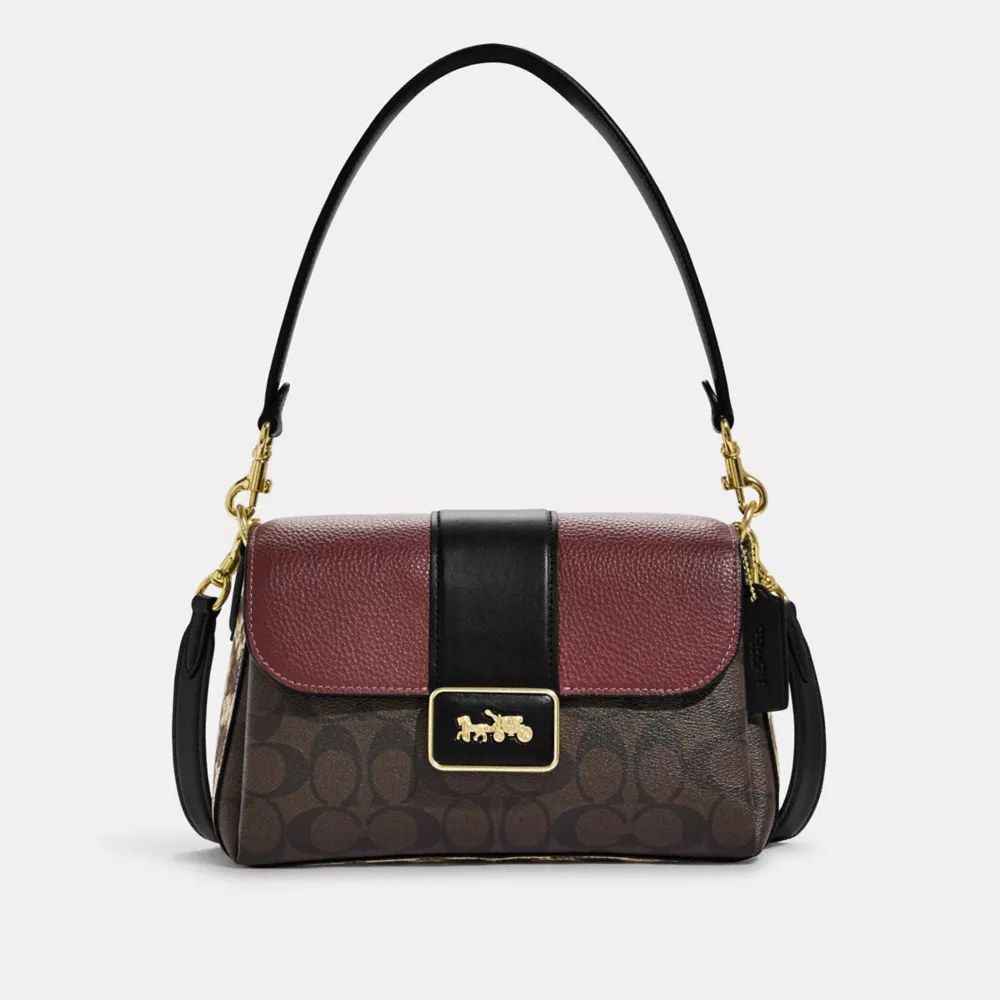
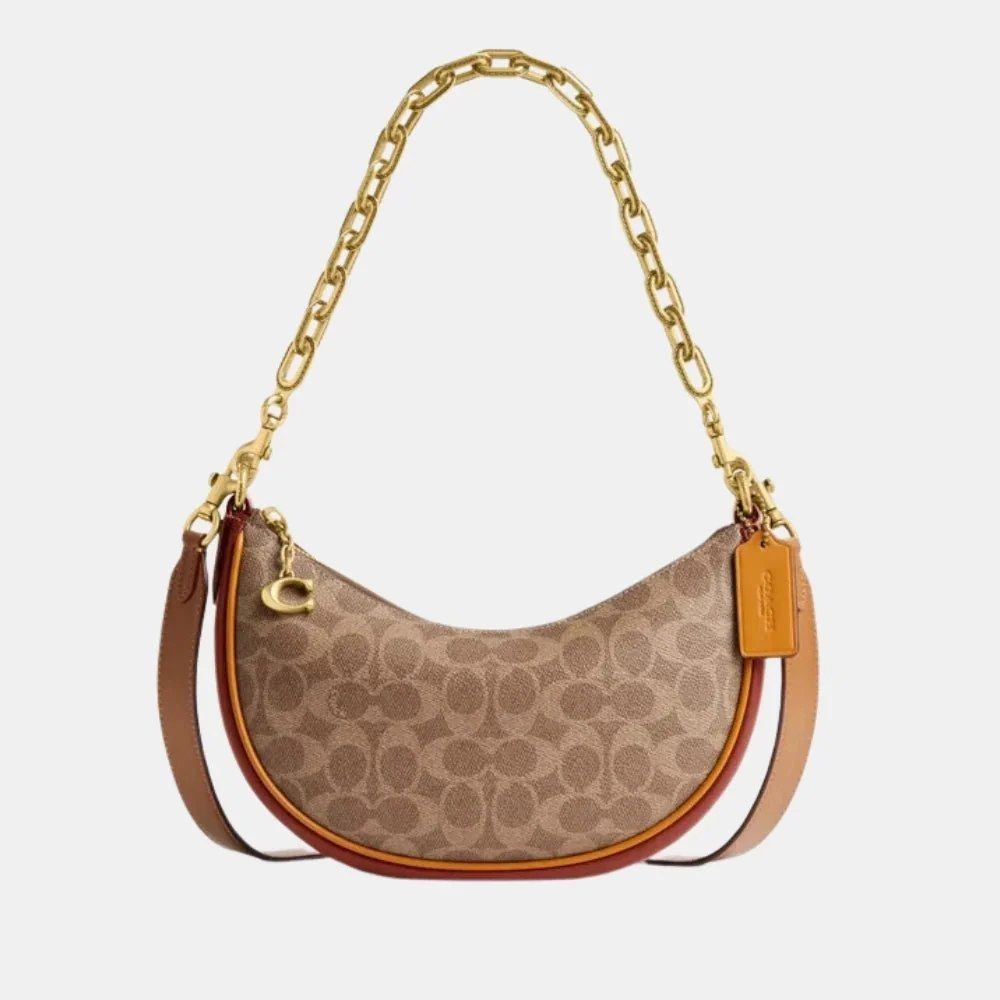
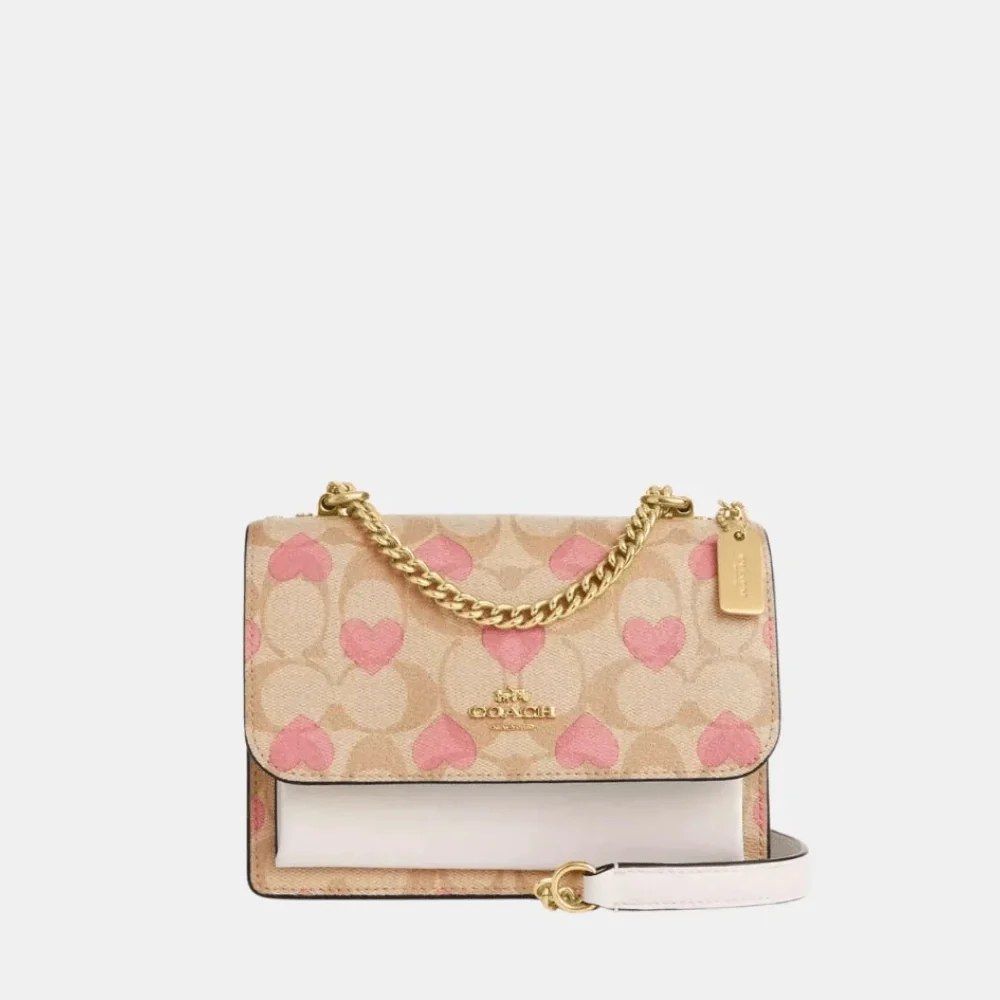
Coach also makes lines designed for its outlet stores, such as the Teri, the Rowan and the Mollie. They're genuine Coach, typically in hard-wearing Signature canvas or refined pebble leather, with simpler designs and lower prices than full-price icons. They're a sensible step up from a fashion bag for someone who wants Coach materials at a lower price. Our guide to outlet vs full price explains the difference.
Small leather goods
If a Coach bag is out of reach, a Coach wallet or card case is a genuine piece of Coach leather at a much lower price. Our Coach wallets guide compares them.
Questions to ask yourself before you upgrade
Before you spend more on a Coach bag, be honest with yourself:
- How often will I carry it? Every day, or only sometimes?
- How long do I want it to last? A season, or many years?
- Do I want to follow trends, or do I prefer classics?
- How do I feel about leather? Do I love it, or would I rather avoid it?
- Will I look after it? Leather repays a little care; neglected, any bag ages badly.
- Is this the right time? Would the money be better spent on something else right now?
- Do I know what I'm buying? Full-price or outlet, genuine or not, from an accountable seller.
If your answers are "every day", "years", "classics", "I love leather" and "yes", Coach is very likely worth it for you.
Styling notes for Pakistani occasions
- Everyday and work: a classic Coach shoulder or crossbody bag in black or brown pebbled leather goes with shalwar kameez, kurtas, abayas and western office wear alike.
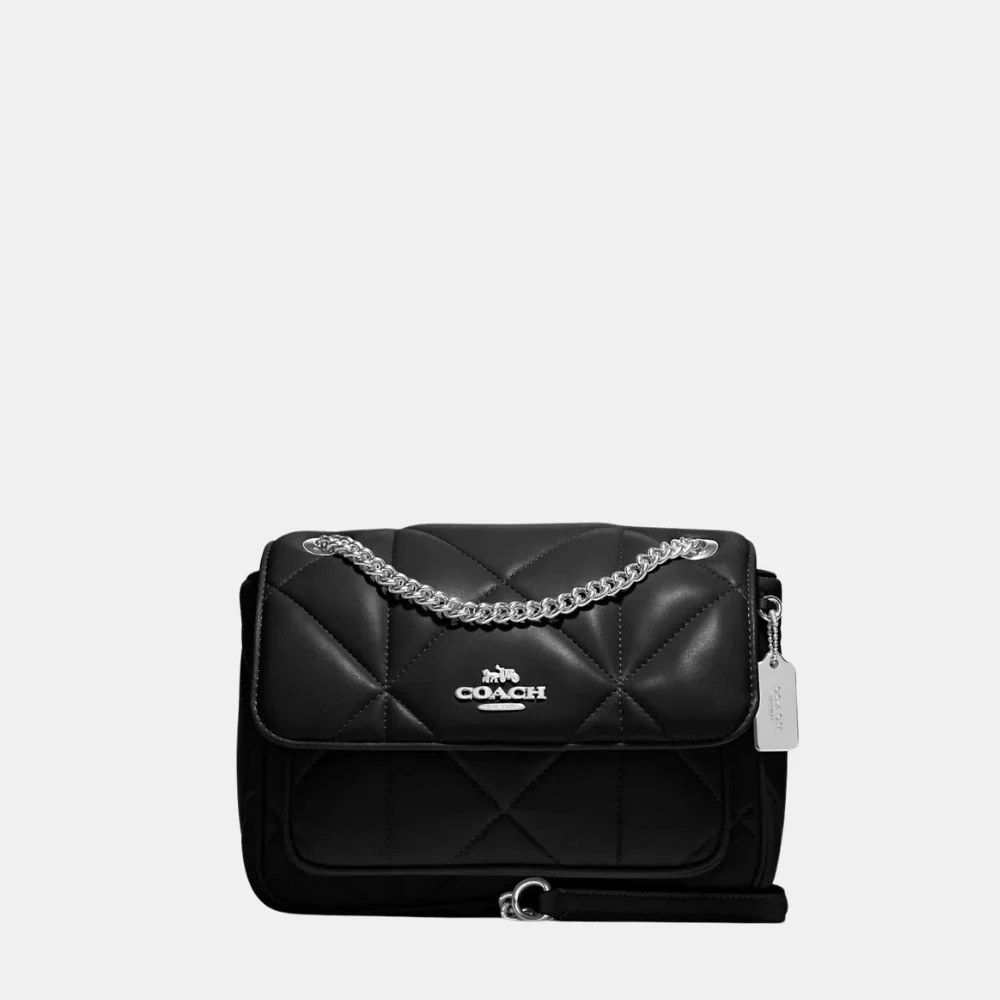
- Weddings and dinners: a Charles & Keith bag with embellishment, metallic finishes or a statement shape can be a fun, affordable occasion bag; a Coach Quilted Tabby or a small leather bag with a chain gives a classic alternative.
- Eid and festivities: colour and charm suit the mood: a pastel or metallic fashion bag, or a Coach bag with charms.
- University: a light, tough bag in coated canvas or a durable synthetic, with a crossbody strap.
- Travel: a zip-top crossbody in a hard-wearing material, whichever brand you choose.
A note on copies
One more difference matters in Pakistan. Because Coach is far more expensive than Charles & Keith, and has no official stores here, it's a much bigger target for counterfeiters. Copies of Coach bags, especially the Tabby and Signature canvas styles, are widely sold in markets and on social media, sometimes at prices close to a genuine Charles & Keith.
That leads to an important point: a genuine Charles & Keith is a far better buy than a fake Coach. A genuine fashion bag is honestly what it says it is; a fake designer bag is neither the brand nor the quality you're paying for. If a genuine Coach is beyond your budget right now, buy a genuine bag at the price you can afford, and save for the Coach. When you do buy one, check the style number against Coach's website and buy from a seller who can show you the actual piece.
Caring for each
Caring for polyurethane bags
- Keep them out of heat: never leave a PU bag in a hot car or in direct sun.
- Wipe them with a soft, slightly damp cloth. Avoid alcohol and harsh cleaners.
- Don't use leather conditioner on PU; it won't absorb it and can leave a residue.
- Store them in a cool, dry, ventilated place, stuffed to keep their shape, never in plastic.
- Handle the edges and handles gently, where peeling usually starts.
Caring for leather and coated canvas
- Wipe leather with a soft, dry cloth, and coated canvas with a slightly damp one.
- Condition leather occasionally, following the brand's advice; smooth leathers benefit most.
- Keep leather dry, and dry it naturally if it gets wet, never with direct heat.
- Store it stuffed, in breathable cloth, in a cool, dry place.
- Have worn edges and corners touched up by a leather specialist when needed; leather can be restored.
A note on ethics and the environment
People sometimes assume that synthetic bags are automatically the ethical choice and leather bags aren't, or the reverse. The truth is more complicated.
Polyurethane avoids animal materials, which matters a great deal to many people. But it's made from fossil fuels, and because it can't usually be repaired and wears out sooner, it can mean buying more bags over time.
Leather is an animal material, which some people choose not to use. But a leather bag that lasts many years, and can be repaired, replaces several shorter-lived bags. Some brands also certify their tanneries' environmental standards, for example through the Leather Working Group.
The most sustainable bag is usually the one you buy thoughtfully and use for a long time, whatever it's made of.
How to make your first Coach purchase
If you've decided to step up to Coach, these tips help:
- Start with a classic in a forgiving material. Black or brown pebbled leather, or Signature canvas, hides wear and goes with everything.
- Choose a versatile shape. A medium shoulder bag or crossbody, such as the Tabby 26, the Teri or the Klare, works for most of life.
- Check whether it's full-price or outlet, and pay a price that reflects which.
- Buy from an accountable seller, and check the style number on Coach's website.
- Care for it, and it will repay you for years.
Our Tabby guide, Coach colour guide and best Coach crossbody bags will help you choose.
Frequently asked questions
Is Charles & Keith a luxury brand?
No. It's a fashion brand with stylish designs at accessible prices, mostly in synthetic materials. It has been backed by an LVMH-linked investor since 2011, but it isn't a luxury house.
Is Coach a luxury brand?
Coach is usually described as accessible luxury: a designer leather brand priced below the great European luxury houses. Coach itself has described its positioning as "expressive luxury".
Is Charles & Keith real leather?
Mostly not. Most Charles & Keith bags are made from synthetic materials such as polyurethane, with a smaller number in leather. Check the material on each product.
Why do Charles & Keith bags peel?
Polyurethane can break down over time, especially in heat and humidity, through a process called hydrolysis, which causes peeling and cracking at edges, handles and corners.
Is Coach better quality than Charles & Keith?
Coach generally uses better materials (real leather and leather-trimmed coated canvas) and more durable construction, which is why it costs more and lasts longer. Charles & Keith offers excellent design and value for its price.
Is the upgrade from Charles & Keith to Coach worth it?
If you'll carry the bag every day for years, usually yes. If you like to change your bag often, probably not.
Is there a Coach store in Pakistan?
No. Charles & Keith has official stores in Pakistan; Coach doesn't. Coach bags in Pakistan are bought abroad or from resellers.
Which is better for a gift?
For a trendy gift or a young recipient, Charles & Keith. For a lasting gift, a classic Coach bag or wallet.
Do Coach bags last longer than Charles & Keith bags?
Generally, yes, because leather and leather-trimmed coated canvas age better than polyurethane and can be repaired. How long any bag lasts also depends on how often you use it and how you care for it.
Can a peeling Charles & Keith bag be fixed?
Usually not well. Once polyurethane starts to peel, it's very hard to repair invisibly. Prevention, keeping the bag out of heat and humidity, is the best approach.
Is Coach Signature canvas plastic?
It's a cotton canvas with a protective coating, usually trimmed with leather. The coating makes it water-resistant and durable.
What's the cheapest way to own a genuine Coach?
A Coach wallet or card case, a Coach Outlet design such as the Teri or the Rowan, or one of the smaller leather bags.
Do you sell Charles & Keith?
No. We sell Coach, along with other designer brands including Tory Burch, JW PEI, Polène and several luxury houses.
Do you deliver Coach across Pakistan?
Yes, free, to every city in Pakistan.
Sources
- Wikipedia, Charles & Keith, and Charles & Keith, Brand profile (founding in 1996, stores and countries)
- Martin Roll, Charles & Keith: a truly successful Asian global fast fashion retail brand (the 2011 L Capital Asia stake)
- Speed (Pvt.) Limited, Charles & Keith (the brand in Pakistan)
- The Fashion Law, Judge preliminarily blocks Tapestry-Capri merger (the accessible-luxury market)
- Our Coach history and Tabby guide (Coach's founding, leathers and the 2019 Tabby)
- Coach's and JW PEI's official product specifications for each bag in our shop.